
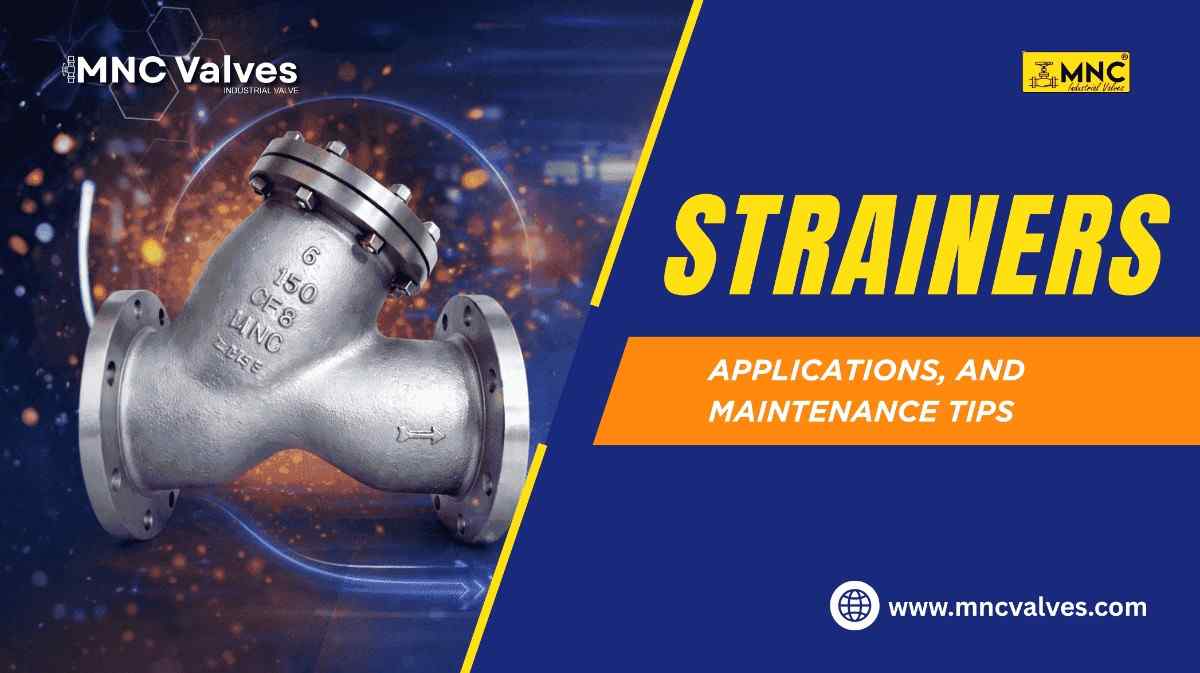
Strainers: Types, Applications, and Maintenance Tips
For industrial pipe systems to operate smoothly and effectively, vital equipment must be shielded from solid pollutants. By eliminating undesirable particles from fluids, strainers contribute significantly to filtering, extending equipment life and minimizing downtime.
What Is a Strainer and Why Does It Matter?
A strainer is a mechanical filter that is placed in pipelines to filter out solid contaminants from liquids, gasses, or steam, such as dirt, rust, scale, and debris. Strainers, in contrast to filters, are mostly used for coarse filtration and are made to safeguard equipment downstream.
Importance of Strainers
-
Prevent damage to pumps, valves, meters, and heat exchangers
-
Improve system efficiency and flow performance
-
Reduce maintenance costs and unplanned shutdowns
-
Extend the service life of pipelines and equipment
Because of these benefits, industrial strainers are considered a critical component in process industries.
Types of Industrial Strainers
1. Y Type Strainer
One of the most popular strainers in industrial settings is the Y Type Strainer.
Design & Working Principle:
Its Y-shaped body captures solid particles as the fluid passes through a wire mesh or perforated screen.
Materials:
-
Cast Iron
-
Carbon Steel
-
Stainless Steel (SS304 / SS316)
Advantages:
-
Compact and cost-effective
-
Suitable for high-pressure applications
-
Ideal for water, oil, gas, steam, and air lines
2. Basket Type Strainer
The Basket Strainer is made for uses where a greater capacity to hold dirt is needed.
Design & Working Principle:
It has a vertical basket component that gathers debris inside the body of the strainer.
Materials:
-
Cast Iron
-
Carbon Steel
-
Stainless Steel
Advantages:
-
Easy cleaning and maintenance
-
Handles high flow rates
-
Provides efficient filtration for liquids
3. T Type Strainer
For heavy-duty, high-flow industrial applications, the T Type Strainer is appropriate.
Design & Working Principle:
Larger screens and improved dirt retention without regular cleaning are made possible by its T-shaped body.
Materials:
-
Carbon Steel
-
Stainless Steel
Advantages:
-
High filtration efficiency
-
Suitable for large pipelines
-
Robust and durable construction
4. Temporary Strainer
When pipelines are being commissioned or started, temporary strainers are utilized.
Design & Working Principle:
They are put in place temporarily to collect construction waste, and after the system is cleaned, they are taken out.
Types:
-
Cone Strainer
-
Plate Strainer
-
Basket Temporary Strainer
Advantages:
-
Protects new equipment during startup
-
Cost-effective solution
-
Easy installation and removal
Industrial Applications of Strainers
In many different sectors, strainers are utilized extensively to guarantee product quality and system dependability.
Where Are Strainers Used?
-
Water Treatment Plants: Removal of sand, grit, and debris
-
Oil & Gas Industry: Protection of pumps, compressors, and valves
-
Chemical Industry: Prevent contamination and equipment damage
-
Power Plants: Safeguard boilers, turbines, and heat exchangers
-
HVAC Systems: Protect chillers, cooling towers, and pumps
-
Pharmaceutical Industry: Ensure clean and contamination-free processes
-
Food & Beverage Processing: Maintain hygiene and equipment efficiency
Key Features & Benefits of MNC VALVES Strainers
Industrial strainers that satisfy strict operational requirements and global quality standards are designed and produced by MNC VALVES.
Features
-
Manufactured as per ASTM, ANSI, and ASME standards
-
Available in multiple sizes and pressure ratings
-
High-quality filtration screens with precise mesh sizes
-
Robust construction for long service life
Benefits
-
Excellent resistance to corrosion and pressure
-
Reliable performance in high-temperature applications
-
Reduced maintenance and operational costs
-
Strict quality assurance and testing before dispatch
Maintenance Tips for Industrial Strainers
Strainers will operate at their best and last longer with proper maintenance.
Practical Maintenance Tips:
-
Inspect and clean strainers at regular intervals
-
Remove accumulated debris to avoid pressure drop
-
Replace damaged or clogged screens promptly
-
Check gaskets and seals during maintenance
-
Monitor pressure differential across the strainer
Regular maintenance helps maintain flow efficiency and prevents system failures.
How to Select the Right Strainer
Choosing the correct strainer depends on several factors:
-
Type of fluid: Water, oil, gas, steam, or chemicals
-
Operating pressure & temperature
-
Pipeline size and flow rate
-
Filtration requirement (mesh size)
-
Material compatibility
By consulting with an experienced manufacturer like MNC VALVES, you can select the ideal strainer for your needs.
Why Choose MNC VALVES?
MNC VALVES, a top producer of industrial strainers in Ahmedabad, India, is renowned for its dependability, quality, and client satisfaction. Our strainers are designed to be durable, effective, and compliant with international standards.
Contact MNC VALVES Today
Are you trying to find Y Type strainers, temporary strainers, basket strainers, or high-quality industrial strainers?
For professional advice, affordable prices, and specialized solutions made to meet your industrial demands, get in touch with MNC VALVES right now.
Contact Us: Click Here
MNC VALVES: Reliable Industrial Flow Control & Filtration Solutions.

