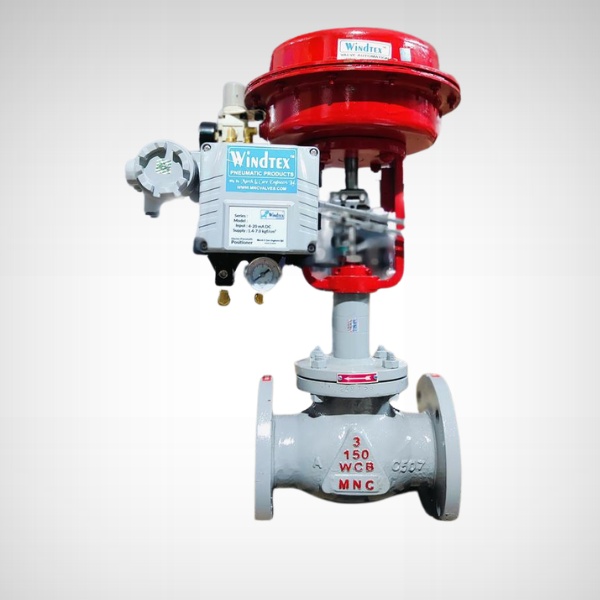
MNC Valves is a Manufacturer of Knife Edge Gate Valve in India, manufacturing heavy-duty slurry isolation valves designed for abrasive, viscous, fibrous, and solid-laden media.
Our knife edge gate valves are engineered specifically for industries where conventional wedge gate valves fail due to clogging, slurry deposition, or solid accumulation.
These valves are widely used in mining, cement, pulp & paper, wastewater, ash handling, and chemical slurry service.
MANUFACTURING STANDARDS
- MSS SP-81 – Knife Gate Valves
- ASME B16.5 – Flanged Ends (Where applicable)
- API 598 – Inspection & Testing
- ISO 5211 – Mounting Interface (Where applicable)
- ISO 9001 – Quality Management System
PRODUCT DESIGN OVERVIEW
Knife edge gate valves are linear motion isolation valves featuring a sharpened stainless steel gate designed to cut through solids during closing.
Construction includes:
- Cast / Fabricated body
- Precision-machined knife edge gate
- Replaceable resilient or metal seat
- Stuffing box with gland packing
- Rising stem design (Standard for actuation)
- Non-rising stem option (Manual)
This design ensures:
- Cutting action through slurry & solids
- Full bore flow when open
- Reduced clogging
- Low pressure drop
- Reliable isolation in abrasive service
FLOW DIRECTION OPTIONS
Uni-Directional Knife Gate Valve
- Designed for single direction pressure
- Pressure-assisted downstream sealing
- Common in slurry discharge systems
Bi-Directional Knife Gate Valve
- Sealing in both directions
- Dual seat arrangement
- Used in reversible flow systems
Selection depends on process requirement.
SIZE & PRESSURE RANGE
- Size Range: DN 50 mm to DN 600 mm
- Pressure Rating: Up to 10 Bar (Application dependent)
- Temperature: Up to 200°C (Material dependent)
Knife edge gate valves are designed for low to medium pressure slurry systems.
Not recommended for high-pressure hydrocarbon pipelines.
MATERIALS OF CONSTRUCTION
| Body Materials |
Gate Materials |
Seat Materials |
| Cast Iron (CI), Ductile Iron (DI), WCB (Carbon Steel), CF8 (SS304), CF8M (SS316) |
SS304, SS316, SS316L, Duplex (On Request) |
EPDM, NBR, Viton, PTFE, Metal Seated (For abrasive/high temperature service) |
DESIGN FEATURES
- Sharp cutting gate edge
- Full bore design
- Replaceable seats
- Blow-out resistant stem
- Low operating torque
- Compact face-to-face as per MSS SP-81
- Suitable for horizontal or vertical installation
- Actuation-ready design
END CONNECTION OPTIONS
- Wafer Type
- Lug Type
- Flanged Type
Flange drilling available as per ANSI / DIN standards.
TESTING & QUALITY CONTROL
All valves are tested as per API 598:
- Hydrostatic shell test
- Seat leakage test
- Functional stroke test
- Dimensional inspection
Third-party inspection available upon request.
OPERATING PRINCIPLE
Knife edge gate valves operate via linear motion.
During closing:
- The sharpened gate moves downward
- The blade cuts through slurry or solid media
- Pressure forces gate against seat
- Tight shut-off is achieved
The cutting mechanism prevents jamming common in wedge gate valves.
ACTUATION OPTIONS
Knife gate valves require linear thrust actuation.
Available options include:
Manual Operation
Gear Operated
- Worm gear for larger sizes
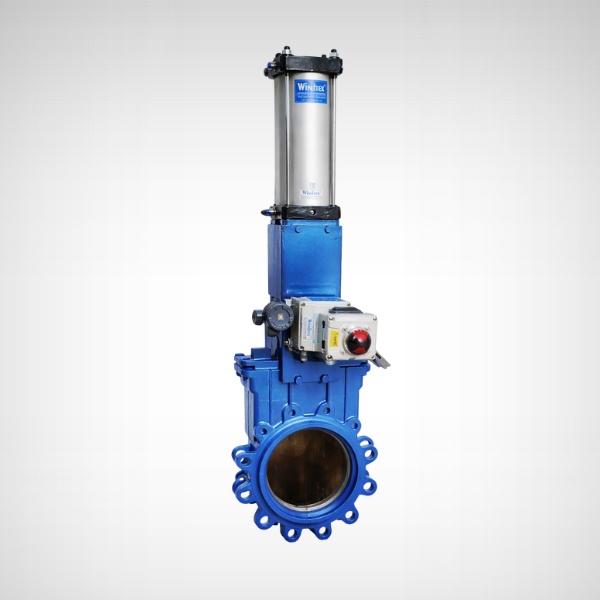
Pneumatic Cylinder Operated Knife Gate Valve (Most Common)
- Double Acting Pneumatic Cylinder
- Spring Return Pneumatic Cylinder
- High thrust linear motion
- Fast operation
- Suitable for automated slurry systems
Pneumatic cylinder actuation is widely used in:
- Mining slurry lines
- Ash handling systems
- Cement plants
- Wastewater treatment plants
Electric Actuated Knife Gate Valve
- For applications without compressed air
- Controlled linear automation
Hydraulic Actuation (On Request)
- For heavy-duty thrust requirement
APPLICATIONS
- Mining & Mineral Processing
- Cement & Fly Ash Handling
- Pulp & Paper Industry
- Wastewater & Sewage Treatment
- Sugar Industry
- Chemical Slurry Lines
- Power Plant Ash Handling
KNIFE EDGE VS WEDGE GATE VALVE
| Feature |
Wedge Gate Valve |
Knife Edge Gate Valve |
| Media |
Clean Liquid |
Slurry / Solids |
| Clogging Risk |
High |
Low |
| Sealing Method |
Wedge seating |
Cutting blade + seat |
| Pressure |
Higher |
Moderate |
Best Application |
Water / Oil |
Sludge / Slurry / Pulp |
Knife edge gate valves are specialized slurry isolation valves.
Frequently Asked Questions
1. What is a knife edge gate valve?
+
A linear motion isolation valve designed for slurry and solid media.
2. What standard is followed?
+
MSS SP-81.
3. What size range is available?
+
DN 50 mm to DN 600 mm.
4. What pressure rating is available?
+
Up to 10 Bar depending on application.
5. What is most common actuation type?
+
Pneumatic cylinder operated.
6. What is difference between uni and bi directional?
+
Uni seals in one direction; bi seals in both directions.
7. Is it suitable for slurry?
+
Yes.
8. Can it cut through solids?
+
Yes via sharpened gate edge.
9. Is metal seat available?
+
Yes.
10. Is it suitable for high-pressure pipeline?
+
No.
11. Is full bore design available?
+
Yes.
12. What industries use it?
+
Mining, cement, wastewater, pulp & paper.
13. Is hydro testing done?
+
Yes as per API 598.
14. Can it be automated?
+
Yes pneumatic and electric.
15. Is rising stem available?
+
Yes.
16. Can it handle abrasive media?
+
Yes with proper material selection.
17. Is replacement seat available?
+
Yes.
18. What is typical temperature range?
+
Up to 200°C depending on materials.
19. Can it be installed vertically?
+
Yes.
20. How to select correct configuration?
+
Based on media, solids %, pressure, temperature and flow direction.
ENQUIRY DETAILS REQUIRED
To select correct valve, please provide:
- Size (DN)
- Flow Direction (Uni / Bi)
- Media Type & % Solids
- Operating Temperature
- Pressure, Seat Material Requirement
- Actuation Type (Manual / Pneumatic Cylinder / Electric)
- Installation Orientation
- Quantity
- Project Name
Our engineering team will assist in proper valve selection.