Industrial Ball Valves – MNC Valves Limited
Industrial Ball Valve Manufacturer in India – Engineered for Zero Leakage and Reliable Performance
MNC Valves Limited (Formerly Marck and Care Engineers Limited) is a leading industrial ball valve manufacturer in India, delivering precision-engineered valves designed for zero leakage shut-off, long service life, and dependable performance under demanding industrial conditions.
In modern process industries, valve failure is not just a maintenance issue—it can result in production loss, safety risks, and operational downtime. That is why MNC Valves focuses on engineering-driven manufacturing, ensuring that every ball valve delivers consistent performance in high-pressure, high-temperature, and corrosive environments.
With advanced machining infrastructure, strict quality control systems, and application-based engineering support, we supply ball valves to industries such as oil & gas, petrochemical, chemical processing, power generation, water treatment, steel, cement, pharmaceuticals, and industrial manufacturing.
Request Quote – Get the Right Valve for Your Application
Avoid wrong selection, improve system reliability, and get expert engineering support.
Request Quote Now
What is a Ball Valve?
A ball valve is a quarter-turn rotary valve that uses a spherical ball with a precision-machined bore to control fluid flow.
- When the bore aligns with the pipeline → Flow is allowed
- When rotated 90° → Flow is completely shut off
This simple mechanism provides:
- Instant opening and closing
- Bubble-tight sealing
- Minimal pressure drop
- Low torque operation
- Long operational life
Why Ball Valves Are Used in Industrial Applications
Ball valves are selected in industrial systems because they offer:
- Reliable sealing under pressure
- Quick emergency shut-off
- Low maintenance requirements
- Compatibility with automation
- Consistent long-term performance
They are best suited for on/off isolation applications where tight shut-off is essential.
Complete Ball Valve Range
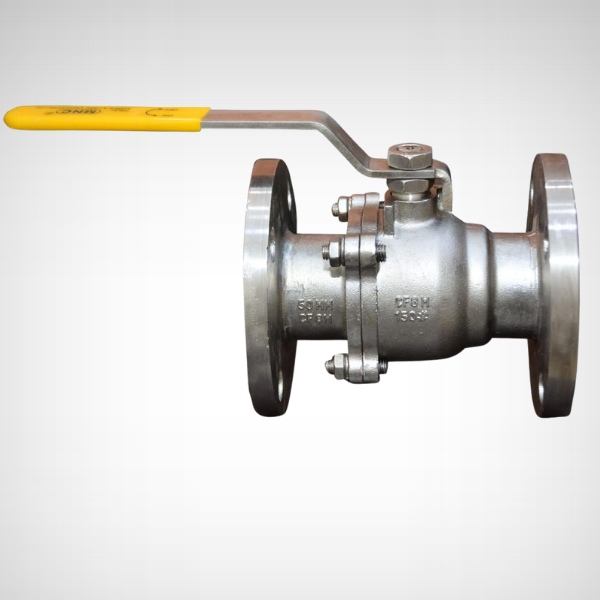
- Floating Ball Valves
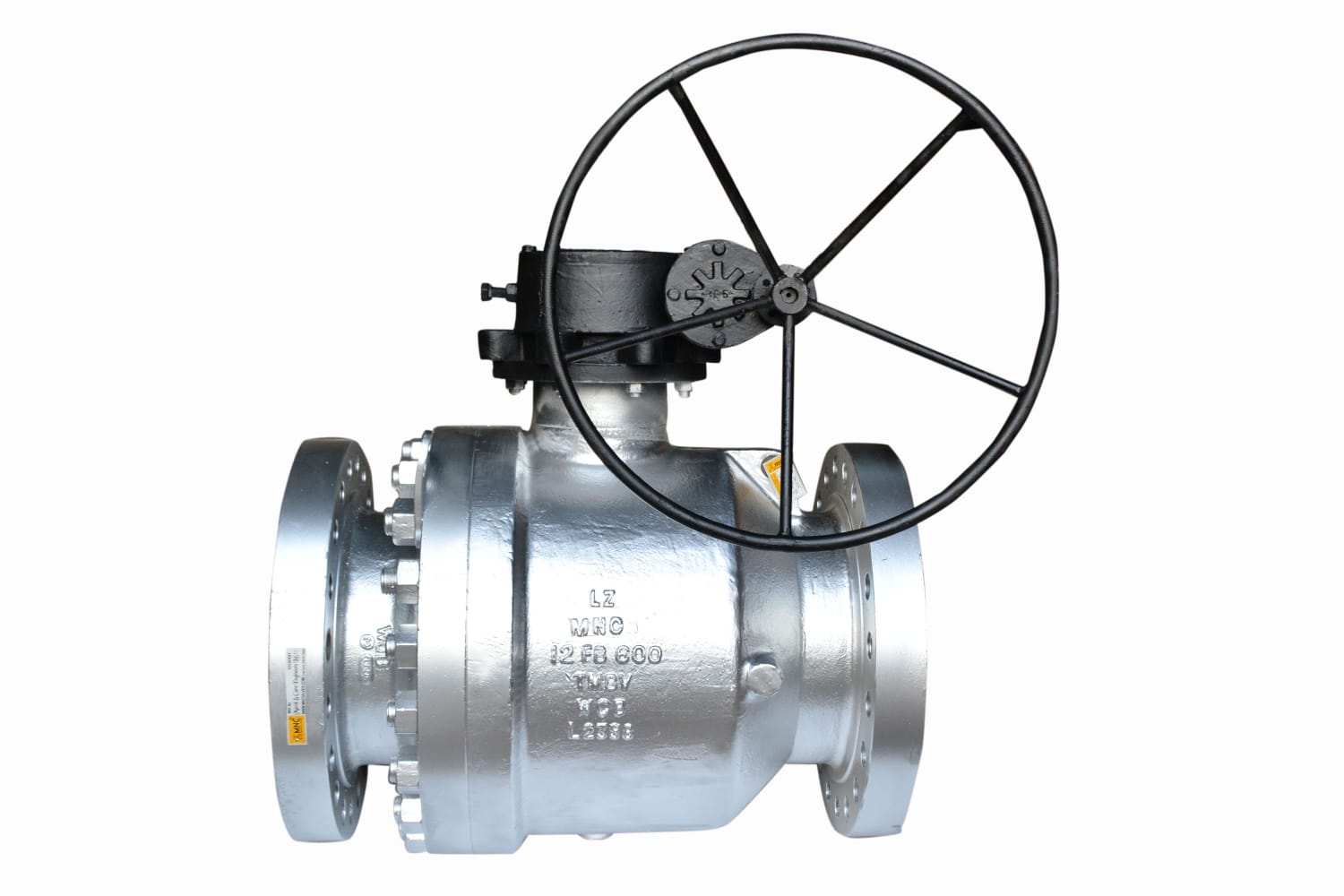
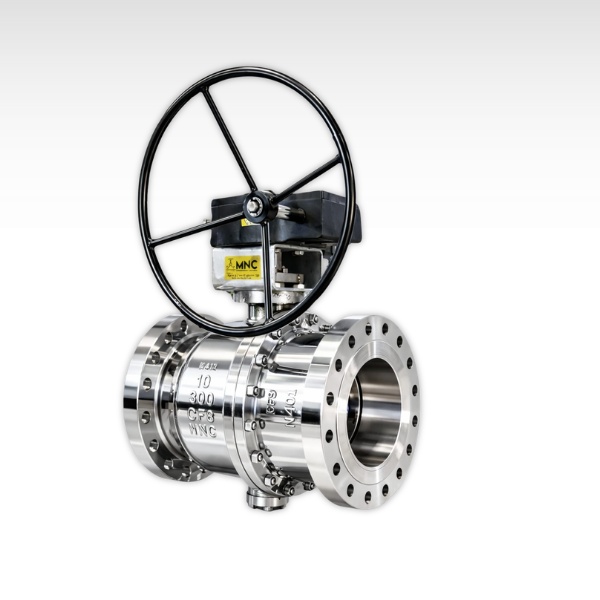
- Trunnion Mounted Ball Valves
- Single Piece Ball Valves
- Two Piece Ball Valves
- Three Piece Ball Valves
- Screwed / Threaded Ball Valves
- Flanged End Ball Valves
- Multi-Port Ball Valves (3-Way / 4-Way)
- Jacketed Ball Valves
- Pneumatic Actuated Ball Valves
- Electric Actuated Ball Valves
Ball Valve Selection Guide
Pressure Selection
- Low to medium pressure → Floating ball valve
- High pressure → Trunnion mounted ball valve
Temperature Selection
- Up to moderate temperature → PTFE / RPTFE seats
- High temperature → Metal seated design
Media Selection
- Water service → SS304 / general industrial materials
- Chemical service → SS316
- Aggressive / demanding service → Duplex / special materials
Operation Selection
- Manual operation → Lever / Gear
- Automatic operation → Pneumatic / Electric actuator
Floating vs Trunnion Ball Valve
| Feature |
Floating Ball Valve |
Trunnion Ball Valve |
| Pressure |
Low to Medium |
High |
| Ball Support |
Seat supported |
Mechanically supported |
| Torque |
Higher |
Lower |
| Application |
General industrial service |
Critical high-pressure service |
Full Bore vs Reduced Bore
| Type |
Benefit |
| Full Bore |
No significant restriction in flow |
| Reduced Bore |
Compact and more economical |
Soft Seated vs Metal Seated
| Type |
Application |
| Soft Seated |
Tight shut-off in standard service conditions |
| Metal Seated |
High temperature and abrasive service |
Technical Specifications
| Parameter |
Details |
| Size Range |
DN15 to DN600 (½” to 24”) |
| Pressure Class |
150#, 300#, 600# |
| Body Material |
WCB, CF8, CF8M, Duplex |
| Ball Material |
SS304, SS316, Duplex |
| Seat Material |
PTFE, RPTFE, PEEK, Metal |
| End Connections |
Flanged / Screwed / Butt Weld |
| Operation |
Lever / Gear / Pneumatic / Electric |
| Temperature Range |
-20°C to +400°C |
| Testing Standard |
API 598 |
Design Standards
- API 6D / API 608
- API 598
- ASME B16.5
- ASME B16.10
- ISO 5211
- EN 12266-1
Working Principle
A ball valve works by rotating a spherical ball inside the valve body. When the bore of the ball aligns with the pipe axis, media passes through freely. When the ball rotates 90 degrees, the solid side blocks the passage and shuts off flow.
This mechanism ensures:
- Fast quarter-turn operation
- Low wear on internal components
- Reliable shut-off performance
Industrial Applications
Oil & Gas
Used in hydrocarbon transfer lines, storage terminals, and pipeline isolation systems.
Chemical Processing
Suitable for corrosive fluid handling with proper material selection such as SS316 or Duplex.
Power Generation
Used in auxiliary pipelines, utility systems, and cooling water circuits.
Water Treatment
Ideal for shut-off duties in treatment plants, pumping systems, and process lines.
Steel & Cement
Preferred for industrial service conditions requiring durable and dependable shut-off valves.
Pharmaceuticals & Food Processing
Used where clean flow isolation and reliable shut-off are important.
Where Ball Valves Should Not Be Used
- Continuous throttling applications
- Severe slurry systems without special design consideration
- Extreme temperatures without proper seat and body material selection
Incorrect selection can reduce service life, damage sealing surfaces, and create leakage issues.
Ball Valve vs Other Valves
| Valve Type |
Comparison |
| Gate Valve |
Slower operation and more suited for full open/full close linear motion service |
| Globe Valve |
Better for throttling but creates higher pressure drop |
| Butterfly Valve |
Compact and lightweight, but sealing performance may be lower in certain services |
Ball valves are best suited for tight shut-off applications requiring fast and dependable isolation.
Material Selection Guide
- WCB: General industrial applications
- SS304: Water systems and mild chemical service
- SS316: Corrosive media and chemical service
- Duplex: High strength and enhanced corrosion resistance
Quality Assurance and Testing
At MNC Valves Limited, every valve undergoes strict inspection and testing procedures:
- Hydrostatic pressure testing
- Seat leakage testing
- Air pressure testing
- Visual and dimensional inspection
All testing is conducted in line with API requirements to ensure performance and reliability.
Why Choose MNC Valves Limited
- Advanced manufacturing facility
- Precision machining and controlled assembly
- Strict quality control systems
- Wide product range
- Competitive pricing
- Fast delivery support
- Customization as per application requirement
Avoid Wrong Valve Selection
Selecting the wrong valve can increase downtime, maintenance cost, and process risk.
Request Quote
Frequently Asked Questions (FAQs)
1. What is a ball valve used for?
Ball valves are used for on/off flow control in pipelines where tight shut-off is required.
2. Why are ball valves preferred in industry?
They are preferred because of their zero leakage sealing capability, quick operation, and long-term reliability.
3. Can ball valves be used for throttling?
No, ball valves are generally not recommended for continuous throttling service.
4. What is a floating ball valve?
A floating ball valve has a ball supported by seats, and the ball moves slightly under pressure to improve sealing.
5. What is a trunnion mounted ball valve?
A trunnion ball valve has a mechanically supported ball, making it suitable for high-pressure and large-size applications.
6. What materials are used in industrial ball valves?
Common materials include WCB, SS304, SS316, and Duplex stainless steel.
7. What is a PTFE seat?
PTFE is a soft seat material widely used for tight shut-off in standard temperature applications.
8. What is a metal seated ball valve?
A metal seated ball valve is used in high-temperature or abrasive applications where soft seats may fail.
9. What pressure classes are available?
Common pressure classes include 150#, 300#, and 600# depending on valve design.
10. What sizes are available?
Industrial ball valves are available from ½” to 24” and above depending on design requirements.
11. What industries use ball valves?
Ball valves are widely used in oil & gas, chemical, water treatment, power, steel, cement, pharmaceuticals, and many other industries.
12. Are ball valves leak-proof?
Yes, when properly selected, manufactured, and maintained, ball valves provide reliable tight shut-off.
13. What is fire-safe design?
Fire-safe design ensures the valve can continue to provide sealing performance even during fire conditions, as per applicable standards.
14. What is an anti-static feature?
An anti-static device prevents build-up of static electricity and reduces spark risk in hazardous service.
15. Can ball valves handle high temperature?
Yes, with the correct seat and body material selection, ball valves can handle elevated temperatures.
16. What is an actuated ball valve?
An actuated ball valve is operated automatically using pneumatic or electric actuators instead of manual operation.
17. What is a full bore valve?
A full bore ball valve has an internal bore equal to the pipe diameter, minimizing pressure loss.
18. What is a reduced bore valve?
A reduced bore valve has a smaller internal bore, making it more compact and economical.
19. How do I select the right ball valve?
Selection depends on pressure, temperature, fluid type, operation mode, and application requirement.
20. Does MNC Valves Limited provide customized valves?
Yes, we provide customization as per process conditions, materials, pressure ratings, and automation needs.
Contact MNC Valves Limited
Looking for a reliable industrial ball valve manufacturer?
Get fast quotation, technical support, and dependable valve solutions for your application.
Contact Us