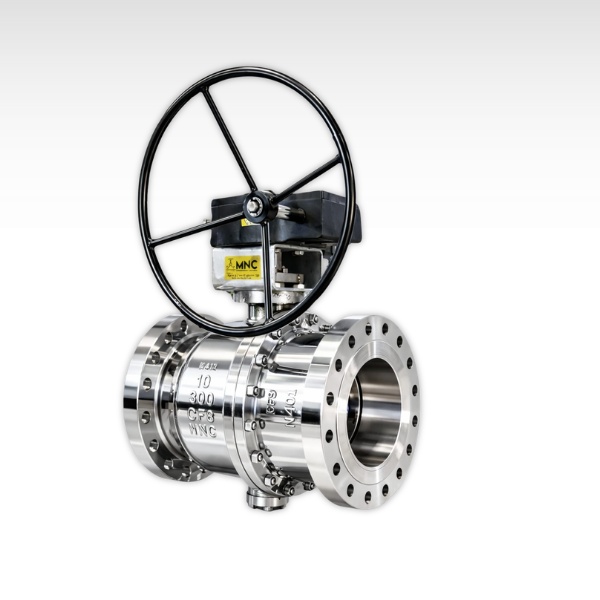
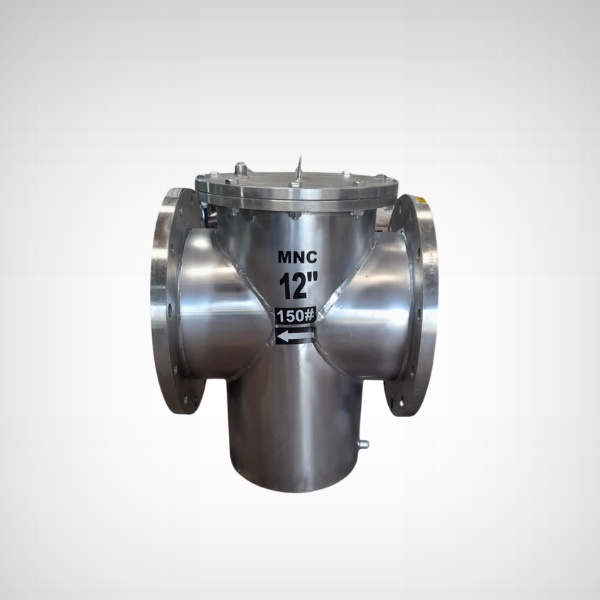
Y Type Strainer

Description

Y Type Strainer

Y TYPE STRAINER

Industrial Y Type Strainers | Flanged End | Class 150 / 300 | DN 15–600

MNC Industrial Valves is a reliable Y Type Strainer Manufacturer in India, supplying industrial pipeline strainers designed to remove unwanted solid particles from fluid systems and protect downstream equipment.

Our Y Type Strainers are engineered to provide dependable filtration performance in demanding industrial environments. These strainers help protect pumps, control valves, flow meters, regulators, and other critical equipment from damage caused by debris and pipeline contamination.

MNC Y Type Strainers are widely used across oil & gas, petrochemical plants, power plants, chemical industries, water treatment facilities, and industrial process pipelines.

MANUFACTURING STANDARDS

Design Standard ASME B16.34
Face to Face Dimension ASME B16.10
Flanged End Connection ASME B16.5
Inspection & Testing API 598
Valve Marking MSS SP-25

PRODUCT OVERVIEW

  • Product Type: Pipeline Strainer
  • Design: Y Type
  • Function: Filtration / Debris Removal
  • Installation: Inline Pipeline

The Y Type Strainer is designed to capture and retain solid contaminants such as rust, welding slag, scale, and foreign particles from process fluid. This prevents damage and operational issues in downstream equipment.

SIZE & PRESSURE

Standard Manufacturing Range:
DN 15 mm to DN 600 mm

Available Pressure Ratings:
Class 150 | Class 300

Higher pressure classes can be offered depending on application requirements.

Temperature Range:
–20Β°C to +400Β°C

MATERIAL OF CONSTRUCTION (MOC)

Body Materials

  • ASTM A216 WCB
  • CF8 (SS304)
  • CF8M (SS316)

Screen Materials

  • Stainless Steel SS304
  • Stainless Steel SS316

Gasket & Bolting

  • PTFE / Graphite Gaskets
  • ASTM A193 B7 / A194 2H

STRAINER SCREEN

Screen Type: Perforated Screen | Wire Mesh Screen

Typical Mesh Sizes: 40 Mesh, 60 Mesh, 80 Mesh, 100 Mesh

Custom mesh sizes available based on filtration requirement.

DESIGN FEATURES

  • Y Pattern Compact Design
  • Stainless Steel Strainer Screen
  • Easy Screen Removal
  • Low Pressure Drop
  • Heavy Duty Industrial Construction
  • Replaceable Screen Element
  • Optional Blow-Off Drain Plug
  • Long Service Life

WORKING PRINCIPLE

Y Type Strainers operate by allowing fluid to pass through a stainless steel filtration screen installed inside the strainer body.

During operation:

  • Fluid flows through the pipeline
  • Solid contaminants are trapped by the screen
  • Clean fluid continues downstream

Collected debris can be removed by cleaning the screen periodically.

INDUSTRIES

  • Oil & Gas Industry
  • Petrochemical Plants
  • Refineries
  • Chemical Processing Industry
  • Power Generation Plants
  • Water Treatment Plants
  • Steel Plants | Cement Industry
  • Fertilizer | Pharmaceutical
  • Pulp & Paper Industry

APPLICATIONS

  • Pump protection systems
  • Control valve protection
  • Flow meter protection
  • Steam pipeline filtration
  • Cooling water filtration
  • Boiler feed water systems
  • Chemical processing pipelines
  • Compressed air systems

TESTING

All strainers are tested as per API 598. Testing includes: Hydrostatic Shell Test, Pressure Retention Test, Visual Inspection.

INSTALLATION GUIDELINES

  • Install strainer with screen chamber facing downward
  • Ensure correct flow direction marking
  • Use correct flange gasket
  • Periodically clean strainer screen
  • Install upstream of sensitive equipment

ADVANTAGES OF Y TYPE STRAINER

βœ” Protects pumps and valves βœ” Prevents equipment damage βœ” Improves system reliability βœ” Easy maintenance βœ” Compact design βœ” Long operational life

Frequently Asked Questions

1. What is the primary function of a Y Type Strainer in pipeline systems? +
A Y Type Strainer is installed in pipelines to remove solid contaminants such as rust, scale, welding slag, and debris from process fluids in order to protect downstream equipment including pumps, control valves, meters, and regulators.
2. What factors should be considered while selecting a Y Type Strainer? +
Selection should consider: β€’ Pipeline size β€’ Pressure class β€’ Fluid type β€’ Operating temperature β€’ Required filtration mesh size β€’ Allowable pressure drop
3. What is the typical pressure drop across a clean Y Type Strainer? +
Pressure drop depends on flow rate and screen size but typically ranges between 0.05 to 0.2 bar for clean screens. Higher pressure drops indicate screen clogging.
4. How is the screen size selected for a Y Type Strainer? +
Screen selection depends on the size of particles that must be removed. Typical industrial filtration: β€’ 40 mesh – coarse filtration β€’ 60 mesh – medium filtration β€’ 80–100 mesh – fine filtration
5. What is the difference between perforated screen and wire mesh screen? +
Perforated screens provide structural strength and support, while wire mesh provides fine filtration capability. Often both are used together.
6. What materials are commonly used for Y Type Strainer bodies? +
Common body materials include: β€’ ASTM A216 WCB (Carbon Steel) β€’ CF8 (SS304) β€’ CF8M (SS316) Material selection depends on fluid compatibility and corrosion resistance requirements.
7. What are the typical applications of Y Type Strainers in process industries? +
Y Type Strainers are commonly used for: β€’ Pump suction protection β€’ Control valve protection β€’ Steam system filtration β€’ Flow meter protection β€’ Heat exchanger protection
8. What is the recommended installation orientation for Y Type Strainers? +
Y Type Strainers should normally be installed with the screen chamber pointing downward to allow debris collection without obstructing flow.
9. What standards are typically followed for manufacturing Y Type Strainers? +
Typical manufacturing standards include: β€’ ASME B16.34 – Design β€’ ASME B16.5 – Flanged Ends β€’ ASME B16.10 – Face to Face β€’ API 598 – Testing
10. What maintenance is required for Y Type Strainers? +
Periodic inspection and cleaning of the screen is required to avoid excessive pressure drop and ensure uninterrupted flow.
11. What happens if a Y Type Strainer screen becomes clogged? +
A clogged screen will cause increased pressure drop and reduced flow rate, which may affect system performance.
12. How often should Y Type Strainers be cleaned? +
Cleaning frequency depends on contamination level in the pipeline but should be monitored through pressure drop measurements.
13. What is the maximum size available for Y Type Strainers? +
Standard manufacturing sizes typically range from DN 15 to DN 300, while sizes up to DN 600 can be manufactured on request.
14. What pressure classes are available for Y Type Strainers? +
Typical pressure classes include: β€’ Class 150 β€’ Class 300 Higher pressure ratings may be provided depending on design requirements.
15. Can Y Type Strainers be used for steam applications? +
Yes, Y Type Strainers are widely used in steam pipelines to prevent debris from entering steam traps and control valves.
16. What is the advantage of using a Y Type Strainer compared to a Basket Strainer? +
Y Type Strainers are more compact and economical, making them suitable for pipelines where installation space is limited.
17. How is pressure drop monitored in strainers? +
Pressure drop is typically monitored using differential pressure gauges installed upstream and downstream of the strainer.
18. Are blow-off connections provided in Y Type Strainers? +
Yes, some designs include a blow-off plug or drain connection to allow removal of debris without removing the strainer cover.
19. What is the difference between a Y Type Strainer and a T Type Strainer? +
Y Type Strainers are compact and used in smaller pipelines, while T Type Strainers are used in larger pipelines with higher flow rates.
20. How does a Y Type Strainer protect control valves? +
By removing solid particles before the fluid reaches the control valve, the strainer prevents seat damage, erosion, and malfunction.

ENQUIRY DETAILS REQUIRED

To assist in selecting the correct Y Type Strainer, kindly provide the following information:

  • Strainer Size (DN / Inch)
  • Pressure Rating (PN / Class)
  • Body Material (CI / CS / SS304 / SS316)
  • Screen / Mesh Material (SS304 / SS316)
  • Mesh Size / Filtration Requirement
  • End Connection (Flanged / Screwed / Welded)
  • Media / Fluid
  • Operating Temperature
  • Operating Pressure
  • Quantity
  • Application Details

Our engineering team will assist in recommending the most suitable strainer configuration for your pipeline filtration application.