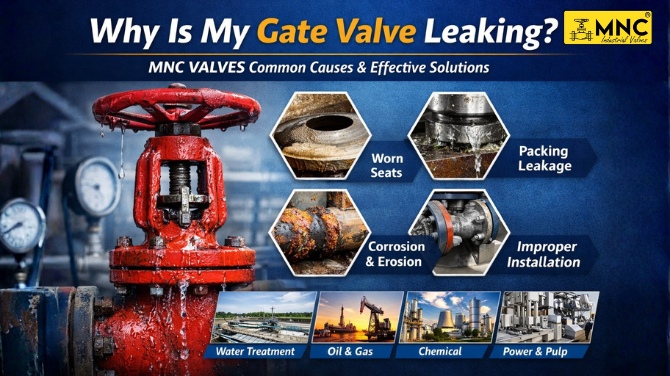
Why Is My Gate Valve Leaking? Common Causes & Effective Solutions
Leakage in gate valves is a frequent industrial maintenance issue that can result in unscheduled downtime, safety hazards, and efficiency losses. Knowing Why My Gate Valve Is Leaking facilitates early problem diagnosis and the implementation of long-term, practical solutions by engineering and maintenance teams.
How Do Gate Valves Operate and What Is Their Function?
In pipelines, a gate valve is a linear motion isolation valve that initiates or stops fluid flow. It works by raising or lowering a solid gate that is perpendicular to the flow channel, such as a wedge, slab, or knife. There is very little pressure decrease when the gate is fully open since it is totally out of the flow.
Because gate valves offer tight shut-off and are appropriate for high-pressure and high-temperature applications, they are frequently found in power plants, chemical processing facilities, oil and gas pipelines, and water treatment facilities. Their internal parts, however, are subject to process media, pressure changes, and mechanical wear, all of which might eventually result in leakage.
Given that leaks can happen through the body, bonnet, packing area, or seat, it is imperative to comprehend the valve’s operation before examining the reasons behind gate valve leaks.
Common Causes of Gate Valve Leakage
Worn or Damaged Valve Seats
The sealing surface between the valve body and the gate is provided by valve seats. Repetitive cycles of opening and closing can erode these surfaces over time. Sand or scale are examples of hard fluid particles that might score the seat and hinder adequate sealing.
For instance, suspended particles progressively erode the seating surfaces in water distribution pipelines that transport untreated water. Even though the valve seems to be completely closed, this causes interior leaking.
Packing Gland Leakage
Packing gland leakage is one of the most obvious problems with industrial gate valves. While permitting stem movement, the packing material surrounding the valve stem keeps fluid from escaping. Its capacity to seal can be diminished by aging packing, improper compression, or temperature cycling.
Leaks around the stem area may result from packing materials hardening in steam or thermal oil systems as a result of heat exposure.
Corrosion and Erosion
When valve materials undergo a chemical reaction with the process fluid or the environment, corrosion results. On the other side, abrasive particles or high-velocity flow are what induce erosion.
The handling of acids or alkaline solutions in chemical facilities frequently results in corrosion-related leaks. Similar to this, erosion frequently occurs in slurry lines used in pulp processing or mining, where internal surfaces are constantly attacked by abrasive particles.
Improper Installation
One frequently disregarded source of leaks is improper valve installation. The valve body or seating surfaces may become distorted due to flange misalignment, uneven bolt tightening, or installation against the suggested flow direction.
For example, if a gate valve is installed in a pipeline without the right support, external forces may be introduced, which over time may cause body or bonnet leaks.
Material or Manufacturing Defects
Premature leaking can be caused by manufacturing flaws or inconsistent materials, however these are less frequent. Although they might not be noticeable at commissioning, casting porosity, incorrect heat treatment, or dimensional errors might pose problems at operating pressure and temperature.
This emphasizes how crucial it is to perform extensive testing and inspection before to installation, particularly for crucial service valves.
Effective Solutions to Fix a Leaking Gate Valve
Addressing leakage requires a systematic approach based on accurate diagnosis:
-
Seat Repair or Replacement: If leakage is internal and caused by worn seats, lapping or replacing the seat and gate may restore tight shut-off. In severe cases, valve replacement is more practical.
-
Packing Adjustment or Renewal: For stem leakage, tightening the gland follower evenly may solve minor leaks. If leakage persists, replacing the packing with a compatible material is recommended.
-
Corrosion Mitigation: Using corrosion-resistant alloys or protective coatings can extend valve life in aggressive environments. Early indicators of material deterioration might be found with routine inspection.
-
Correct Installation Practices: Ensure proper alignment, correct torque on flange bolts, and adequate pipeline support. Following installation guidelines reduces stress-related leakage.
-
Pressure and Functional Testing: After maintenance, hydrostatic or pneumatic testing confirms that leakage issues have been resolved before returning the valve to service.
These solutions form the backbone of effective gate valve maintenance programs across industries.
Industry-Specific Gate Valve Leakage Issues
Water Treatment Industry:
Gate valves in water treatment plants often face leakage due to sediment buildup and corrosion. Poor water quality accelerates seat wear, making periodic inspection essential.
Oil & Gas Industry:
High-pressure and high-temperature conditions can cause thermal expansion issues and packing degradation. Leakage in this sector poses safety and environmental risks, requiring strict maintenance protocols.
Chemical Industry:
Chemical compatibility is critical. Leakage often results from corrosion caused by incompatible materials used in valve construction.
Power Plants:
Thermal cycling in power plants leads to fatigue in valve components. Packing and bonnet gasket leakage is common in steam lines.
Pharmaceutical Industry:
In pharma applications, even minor leakage can compromise hygiene and process integrity. Valves must maintain tight sealing and be easy to clean and inspect.
Pulp & Paper Industry:
Abrasive slurries and fibrous media cause erosion-related leakage, especially at valve seats and body cavities.
Each industry faces unique challenges, reinforcing the need for application-specific valve selection and maintenance strategies.
Preventive Maintenance Tips to Avoid Gate Valve Leakage
Preventive maintenance is the most effective way to reduce leakage risks:
-
Conduct regular visual inspections for external leaks.
-
Operate valves periodically to prevent seizing.
-
Monitor pressure and temperature limits to avoid overstressing components.
-
Replace packing and gaskets during planned shutdowns.
-
Keep maintenance records to track recurring gate valve leakage causes.
A structured maintenance plan not only reduces leakage but also extends valve service life and improves plant reliability.
Importance of Choosing a Reliable Gate Valve Manufacturer
Consistent material quality, accurate machining, and appropriate testing standards are guaranteed when you choose a trustworthy manufacturer. Leakage risks are reduced throughout the valve’s lifecycle by companies like MNC VALVES, which place a strong emphasis on engineering precision and adherence to industry standards.
Frequently Asked Questions
1. Why Is My Gate Valve Leaking even when fully closed?
This usually indicates worn or damaged valve seats or debris trapped between the gate and seat.
2. Can packing gland leakage be fixed without shutting down the system?
Minor leakage may be reduced by careful gland tightening, but packing replacement typically requires system isolation.
3. How often should gate valves be inspected?
Inspection frequency depends on service conditions, but critical valves are often checked during every scheduled maintenance shutdown.
4. Is gate valve leakage dangerous?
Yes. Leakage can lead to pressure loss, contamination, safety hazards, and increased operating costs.
5. Are gate valves suitable for throttling applications?
No. Using gate valves for throttling accelerates wear and increases the likelihood of leakage.
Conclusion
Long-term dependability and efficient troubleshooting depend on knowing why your gate valve is leaking. Industrial facilities can lower operating risks and downtime by determining the underlying causes, implementing workable remedies, and adhering to preventative maintenance procedures. Safer, more effective plant operations are supported by routine review and well-informed valve selection.
Also Read: Industrial Valve Materials Guide & Selection | MNC Valves