
MNC Valves Ltd.
MNC Valves Limited manufactures high-performance butterfly valves engineered for compact installation, low torque operation, reliable shut-off, and long service life across water, chemical, textile, HVAC, utility, power, and industrial process systems.
25+ Years Industrial Valve Manufacturing Experience
Wafer, Lug, Double Flanged, Concentric, Double Offset, Damper & Actuated Range
Suitable for water, utility, chemical, ETP, HVAC, power, and general process service
Application-based selection support with quality-focused manufacturing approach
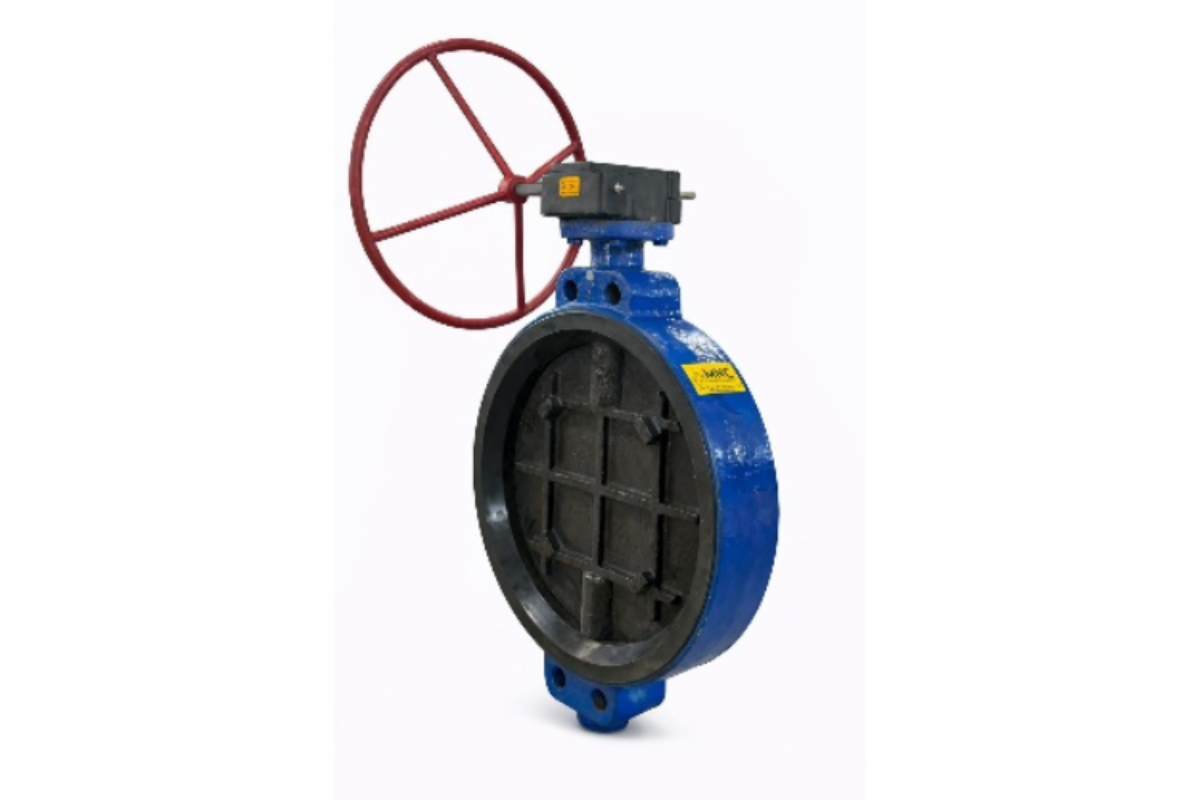
MNC Valves Limited is a trusted manufacturer and supplier of industrial butterfly valves designed for flow isolation, shut-off, and controlled operation in industrial piping systems. Butterfly valves are widely preferred because of their compact design, low weight, low torque requirement, and suitability for medium to large diameter pipelines.
Our butterfly valves are selected across water treatment plants, chemical handling lines, textile processing systems, HVAC circuits, utility systems, power plant service lines, and general industrial pipelines. Each valve is selected based on pressure rating, body material, seat compatibility, operating temperature, fluid characteristics, and required mode of operation.
A butterfly valve is a quarter-turn rotational motion valve used for isolating, regulating, or controlling flow in a pipeline. It consists of a circular disc mounted on a shaft. When the disc rotates parallel to flow, the valve opens; when it rotates perpendicular to flow, the passage closes.
This valve category is commonly selected where the buyer needs a compact, lightweight, and economical valve with quick operation and dependable service for water, gas, air, chemicals, and industrial process media. Butterfly valves are especially effective in larger diameter lines where compactness and installation convenience are important.
This page serves as the main butterfly valve family hub. Explore the core product categories below based on mounting style, design type, application type, and operation type.
Compact and economical solution installed between flanges, suitable for water, utility, HVAC, and general industrial service where space efficiency and simplicity are important.
Lug type valves provide threaded insert mounting and allow end-of-line service with better maintenance flexibility and stronger installation control
Built for stronger pipeline integration and robust installation where line stability, larger sizes, and pressure integrity are important.
Strong flanged-end construction suitable for general industrial shut-off and reliable process isolation duty.
Preferred where inline maintenance, easier servicing, and flanged-end industrial installation are required.
Compact threaded-end solution designed for easier servicing in smaller process and utility lines.
Available with pneumatic or electric actuators for process automation, remote control, shutdown systems, and repeated operating cycles.
Specification
DN 40 to DN 1500
PN10 / PN16 / PN25 / PN40
CI / DI / WCB / CF8 / CF8M
SG Iron / SS304 / SS316
EPDM / NBR / PTFE / Metal
SS410 / SS304
Wafer / Lug / Double Flanged
Lever / Gear / Pneumatic / Electric
-25°C to 400°C depending on seat and design
API / BS / EN
API 598
Selecting the correct butterfly valve depends on mounting style, seat material, process conditions, operating pressure, and required mode of operation.
Compact and economical installation
Wafer Type Butterfly Valve
End-of-line service and maintenance flexibility
Lug Type Butterfly Valve
Stronger mounting and larger line support
Double Flanged Butterfly Valve
Water, utility, and standard resilient seated service
Concentric Butterfly Valve
Higher pressure, lower seat wear, and improved sealing performance
Double Offset Butterfly Valve
Air and gas flow systems
Damper Butterfly Valve
Automation and remote operation
Actuated Butterfly Valve
Selecting the correct butterfly valve depends on mounting style, seat material, process conditions, operating pressure, and required mode of operation.
Widely used in chilled water lines, air handling circuits, and building utility systems because of compact design and low torque.
Selected for process lines, dosing sections, and corrosive media service when supported by proper body and seat material selection.
Suitable for filtration skids, RO plants, utility water lines, ETPs, STPs, and large diameter water handling systems.
Used in chemical dosing, treatment systems, recycling lines, and process utility applications in textile plants.
Suitable for cooling systems, utility pipelines, and plant support services where reliable shut-off and easy operation are important.
Used in process lines, utility connections, plant support systems, and general fluid handling installations across industries.
Main Use
Compact isolation and throttling support
Tight shut-off and quarter-turn isolation
Size Advantage
Better for medium and large sizes
Heavier and costlier in larger sizes
Cost Level
Economical, especially in larger diameters
Moderate to high depending on design
Weight
Lightweight and compact
Heavier construction
Shut-Off Strength
Good and application-dependent
Best for straight-through isolation duty
Pipeline Space Requirement
Lower
Higher
MNC Valves Limited follows a manufacturing-oriented approach focused on dimensional control, product reliability, assembly discipline, and industrial usability.
Quality is treated as a performance commitment, not a formality. Inspection and testing support service reliability before dispatch.
Industrial understanding built through long market and application exposure.
Suitable recommendations for materials, designs, port geometry, and operation modes based on real service conditions.
Real process capability backed by structured execution and testing discipline for dependable industrial use.
Connect with MNC Valves Limited for technical guidance, product selection support, and commercial quotations for your industrial requirement.
Technical support for selection
Quotation support for project needs
Application-focused product guidance
Business-ready follow-up action
MNC Valve Limited Popular Products
Ball Valve
Butterfly Valve & Gate Valve
Strainers Valve
Non Return Valve
Control Valve
Other Valve
The main advantage is compact, lightweight construction with low torque requirement, making butterfly valves economical and convenient for medium and large diameter lines.
Wafer type is generally selected for economical installation between flanges, while lug type is preferred when end-of-line service, easier removal, or better maintenance flexibility is required.
Double flanged butterfly valves are preferred where robust connection strength, better alignment, and stronger installation support are important in larger or heavier duty lines.
Double offset design reduces seat friction during opening and closing, which improves service life, lowers wear, and supports better sealing in more demanding conditions.
A concentric butterfly valve is a resilient seated design where the shaft is centered in the disc and body. It is commonly used in water, utility, and general industrial service.
Seat material directly affects sealing performance, temperature capability, chemical compatibility, and operating torque. Incorrect seat selection may lead to leakage or early wear.
EPDM is commonly suitable for water and neutral fluids. For more aggressive chemical service, PTFE or another compatible seat material is often more suitable.
Yes, butterfly valves can be used for throttling in many applications, but the suitability depends on pressure drop, flow characteristics, valve design, and service conditions.
Actuator torque must be sufficient to overcome seat friction, differential pressure, and operating resistance. Incorrect torque selection can lead to incomplete operation or actuator failure.
Common reasons include incorrect seat selection, pressure differential, disc-seat interference, build-up on internal surfaces, or inadequate actuator sizing.
Yes, but only when selected with suitable body design and sealing arrangement such as metal seats or compatible high-temperature materials.
CI and DI are commonly used for water service, while stainless steel or WCB may be selected depending on corrosion, pressure, and application requirements.
Resilient seated valves provide soft sealing and are commonly used in utility or standard industrial service, while metal seated valves are chosen for higher temperature and more demanding conditions.
Yes, provided the body, disc, and seat materials are selected for the chemical composition, concentration, and operating temperature.
Butterfly valves are highly efficient and economical, especially in larger sizes, but ball valves may provide tighter shut-off in certain isolation-focused applications.
Higher differential pressure increases torque requirement and may influence the choice of valve type, seat design, body construction, and actuator size.
The shaft must withstand operating torque, corrosion exposure, and repeated cycling. Inadequate shaft material can reduce reliability and service life.
Seat condition, disc wear, shaft alignment, leakage signs, actuator performance, and overall operating smoothness should be checked periodically.
Yes, butterfly valves are widely used in HVAC chilled water and utility systems because of their compact size, easy operation, and economical installation.
Manual operation is suitable for simple applications, pneumatic actuation is preferred for fast automation, and electric actuation is selected where controlled remote operation is needed.
WhatsApp us