
MNC Valves Ltd.
MNC Valves Limited manufactures industrial gate valves engineered for reliable shut-off, full bore flow, minimal pressure drop, and long service life across oil & gas, petrochemical, power, water treatment, infrastructure, and industrial process applications.
Full bore isolation with minimal pressure drop
API 600, API 602, and API 6D aligned product range
Cast steel, forged steel, pipeline, and knife gate options
Suitable for high pressure, high temperature, and process isolation duty
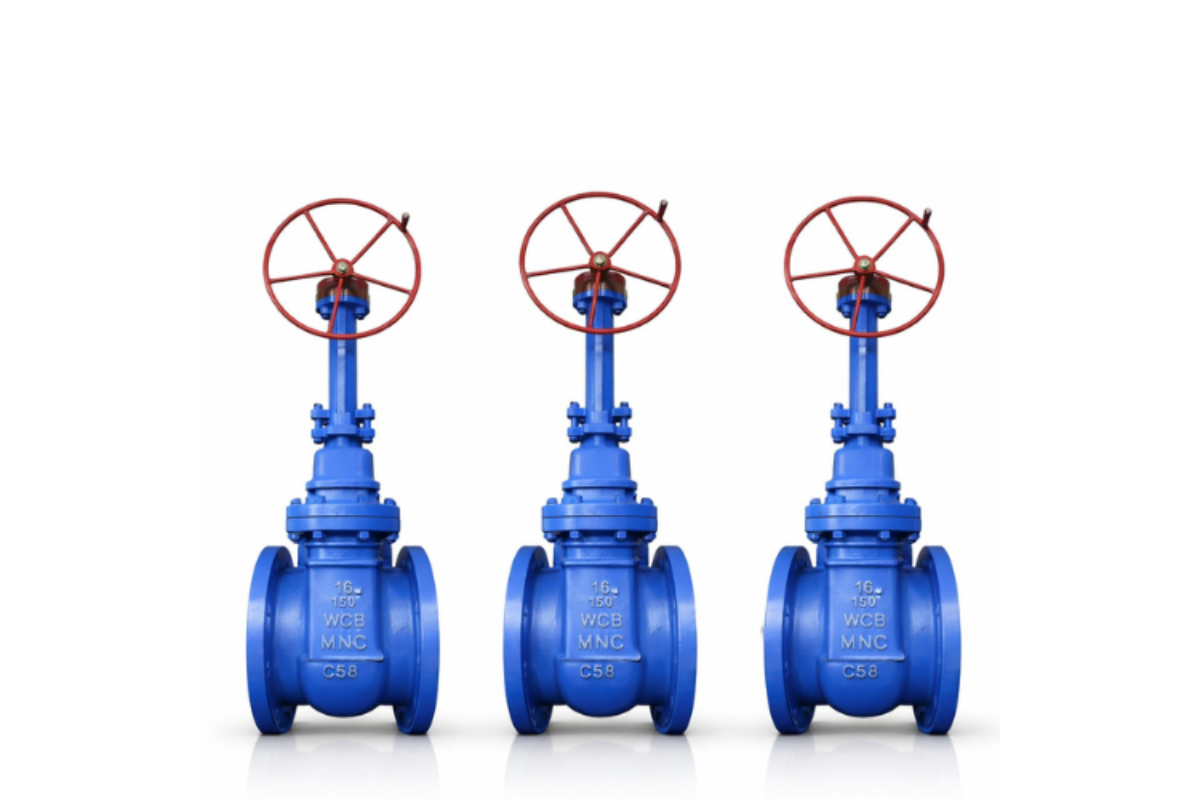
A gate valve is a linear motion isolation valve designed to stop or allow the flow of fluid in a pipeline. It operates by lifting or lowering a wedge, gate, or parallel disc inside the valve body. When fully open, the flow path is substantially straight, resulting in very low pressure drop. When fully closed, the valve provides dependable shut-off for isolation duty.
Gate valves are widely used where the process requires full-flow passage, low resistance, and reliable open-close operation. They are primarily intended for isolation duty and are generally not recommended for throttling or regulating service, because partial opening can lead to seat damage, vibration, and erosion in many applications.
This page serves as the main gate valve family hub. Explore the key categories below based on construction, service duty, and application type.
Designed mainly as per API 600 for general industrial service, oil & gas, petrochemical, utility, and power plant applications where strong body construction and reliable shut-off are required.
Manufactured mainly as per API 602 for compact, high-pressure, and high-temperature applications where forged body construction and stronger pressure handling are required.
Designed for pipeline service with full bore performance and tight isolation in oil, gas, and transmission line systems where pipeline-specific sealing and performance are important.
Special application gate valve used for slurry, viscous media, fibrous material, pulp, wastewater, and solid-laden service where standard wedge gate valves are not suitable.
In this design the stem rises visibly when the valve opens, giving clear indication of valve position. It is widely used where visual operating status and easier maintenance are preferred.
Compact design in which the stem does not rise outside the valve body. It is useful where installation height is limited or where underground or confined-space use is required.
Gate valves are designed to provide a substantially unobstructed flow passage when fully open, resulting in very low pressure drop and efficient line flow.
Depending on the application, valves may use solid wedge, flexible wedge, split wedge, or parallel slide designs to match service requirements.
Gate valves are available in rising stem and non-rising stem configurations depending on operating visibility, maintenance accessibility, and installation constraints.
Specification
Industrial Gate Valve
DN 15 to DN 600
Class 150 / 300 / 600 / 900 / 1500 depending on design
WCB / LCB / WC6 / WC9 / CF8 / CF8M / forged steel grades
CS / SS / Stellite hard faced / alloy options as requiredPTFE / RPTFE / PEEK / Metal Seat
Metal to metal / hard faced seat arrangement
Flanged / Butt Weld / Socket Weld / Threaded depending on type
Handwheel / Gear / Electric Actuator
API 600 / API 602 / API 6D / ASME B16.34 as applicable
API 598 / EN 12266 as applicable
Used for isolation in upstream, midstream, downstream, refinery, and hydrocarbon service lines where dependable shut-off is important.
Suitable for process isolation in demanding chemical and hydrocarbon handling systems.
Used in steam, condensate, utility, and support systems where high pressure and temperature service may be present.
Used in transmission, utility, and treatment pipelines where full flow and reliable isolation are required.
Selected in heavy industrial service where robust isolation valves are required.
Used in plant, municipal, and industrial pipeline systems for dependable open-close operation.
Main Function
Isolation
Throttling + Isolation
Quarter-turn tight shut-off
Pressure Drop
Very low when fully open
Higher
Low
Flow Path
Straight-through
Angular / directional
Ported flow path
Best Use
Full flow isolation
Flow regulation
Fast shut-off
Operation Speed
Slower
Moderate
Fast
Contact MNC Valves Limited for technical support, valve selection guidance, and commercial quotation for your industrial, pipeline, or project requirement.
Project quotation support
Technical selection guidance
Industrial application support
Business-ready follow-up
MNC Valve Limited Popular Products
Ball Valve
Butterfly Valve & Gate Valve
Strainers Valve
Non Return Valve
Control Valve
Other Valve
Gate valves are used for isolation in pipelines where full flow and reliable shut-off are required.
Because partial opening can damage the seat, create vibration, and cause erosion in many applications.
It is a gate valve that allows a substantially unobstructed flow path with very low pressure drop when fully open.
Oil & gas, petrochemical, power, water treatment, infrastructure, and general industrial plants use gate valves widely.
Common standards include API 600, API 602, API 6D, ASME B16.34, and API 598 depending on valve type.
Cast steel gate valves are generally used in broader industrial sizes and services, while forged steel gate valves are more compact and often selected for high-pressure service.
It is a gate valve designed for pipeline service with requirements aligned to API 6D for transmission and pipeline applications.
It is a gate valve in which the stem moves visibly upward when the valve opens, showing the valve position externally.
It is a compact gate valve design where the stem does not rise outside the valve body during operation.
Materials such as WC6, WC9, alloy trims, and suitable hard-faced seats are often selected for high temperature service.
Yes, gate valves can be supplied with electric actuators or gear operation depending on size and application requirement.
Common causes include seat wear, trim damage, incorrect application, improper closure, or service erosion over time.
Trim options may include carbon steel, stainless steel, alloy steel, and Stellite hard-faced arrangements depending on service duty.
No. Knife edge gate valves are designed for slurry and difficult media, while standard wedge gate valves are used mainly for clean or conventional process isolation.
Because MNC Valves Limited provides technical selection support, application-based guidance, and industrial gate valve solutions suitable for project and process requirements.
WhatsApp us