MNC Valves is a Two Way Control Valve Manufacturer in India supplying industrial control valves designed for precise regulation of flow, pressure, and temperature in automated process systems.
Two way control valves regulate fluid flow between a single inlet and a single outlet and are widely used in industrial pipelines where accurate modulation is required.
These valves are essential components in automated process control loops used across various industries.
Typical applications include:
- Chemical processing plants
- Power plants
- Water treatment systems
- HVAC systems
- Industrial automation systems
MANUFACTURING STANDARDS
Our two way control valves are manufactured according to internationally recognized engineering standards:
- ASME B16.34 – Pressure Temperature Ratings
- ASME B16.5 – Flanged End Connections
- API 598 – Inspection & Testing
- IEC 60534 – Control Valve Performance
- ISO 5211 – Actuator Mounting Interface
PRODUCT DESIGN OVERVIEW
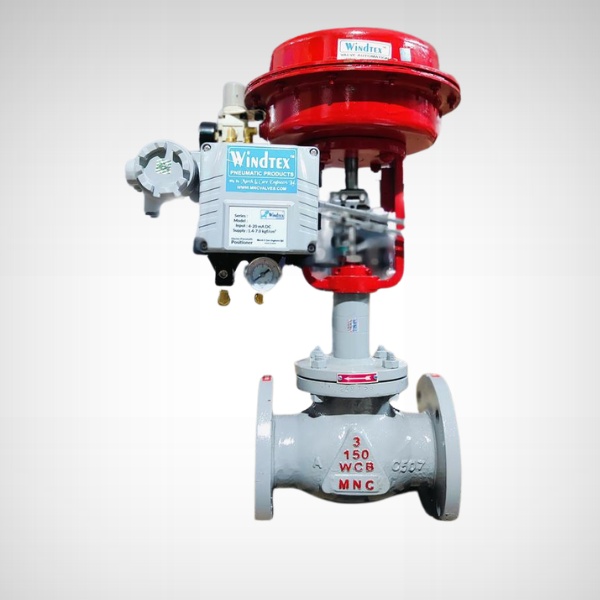
Two way control valves regulate process variables by adjusting the valve opening through a control actuator. The valve plug moves relative to the seat to regulate the flow rate through the pipeline.
Typical control valve assembly includes:
- Valve body
- Trim assembly (plug, seat, stem)
- Bonnet assembly
- Actuator system
- Positioner (optional)
This design allows continuous throttling control for accurate process regulation.
SIZE RANGE
- DN 15 mm to DN 300 mm
- Larger sizes available on request
Pressure ratings depend on valve design and process conditions.
MATERIALS OF CONSTRUCTION
Body Materials: WCB (Carbon Steel), SS304, SS316
Trim Materials: Stainless Steel trim, Hardened trim options available
Seat Materials: PTFE, Metal seat (depending on application)
ACTUATION OPTIONS
Two way control valves can be supplied with:
Pneumatic Actuator
- Most common in process industries
- Fast response time
- Suitable for continuous modulation
Electric Actuator (Motorized)
- Used where compressed air supply is not available
- Suitable for remote automation systems
Manual Override
Optional manual operation for maintenance or emergency operation.
OPERATING PRINCIPLE
Two way control valves operate by modulating the valve plug position inside the valve body. The actuator receives control signals from a process controller and adjusts the valve opening to maintain desired process parameters.
These parameters may include:
- Flow rate
- Pressure
- Temperature
Continuous adjustment ensures stable process operation.
DESIGN FEATURES
- Accurate flow regulation
- Smooth throttling control
- Compatible with automation systems
- Reliable sealing performance
- Positioner compatible design
- Robust industrial construction
INDUSTRIES SERVED
- Chemical processing plants
- Power generation plants
- Water treatment systems
- HVAC systems
- Industrial automation systems
Frequently Asked Questions
1. What is a two way control valve?
+
A control valve that regulates flow between one inlet and one outlet.
2. What materials are available?
+
WCB and Stainless Steel.
3. What size range is available?
+
DN 15 mm to DN 300 mm.
4. What actuator types are available?
+
Pneumatic and electric actuators.
5. What industries use two way control valves?
+
Chemical, power, water treatment, and HVAC industries.
6. What standards are followed?
+
ASME B16.34 and API 598.
7. Can these valves be automated?
+
Yes.
8. Are stainless steel valves available?
+
Yes.
9. Are these valves suitable for throttling service?
+
Yes.
10. Can they regulate temperature?
+
Yes.
ENQUIRY DETAILS REQUIRED
For correct valve selection please provide:
- Valve Size
- Pressure rating
- Process media
- Operating temperature
- Flow requirement
- Actuation type
- Quantity
Our engineering team will assist in selecting the correct two way control valve configuration.