
MNC Valves Ltd.
MNC Valves Limited offers industrial control valves engineered for accurate modulation, stable process control, dependable shut-off, and long service life across water treatment, HVAC, utility, chemical, process, steam, and industrial automation applications. Our control valve range includes Two Way Control Valve, Three Way Control Valve, Diaphragm Control Valve, Pneumatic Control Valve, and Motorized Control Valve
Precise flow, pressure, and temperature regulation
Available in pneumatic and motorized actuation options
Suitable for modulating, mixing, diverting, and process control duty
Designed for utility, water, HVAC, and industrial process automation
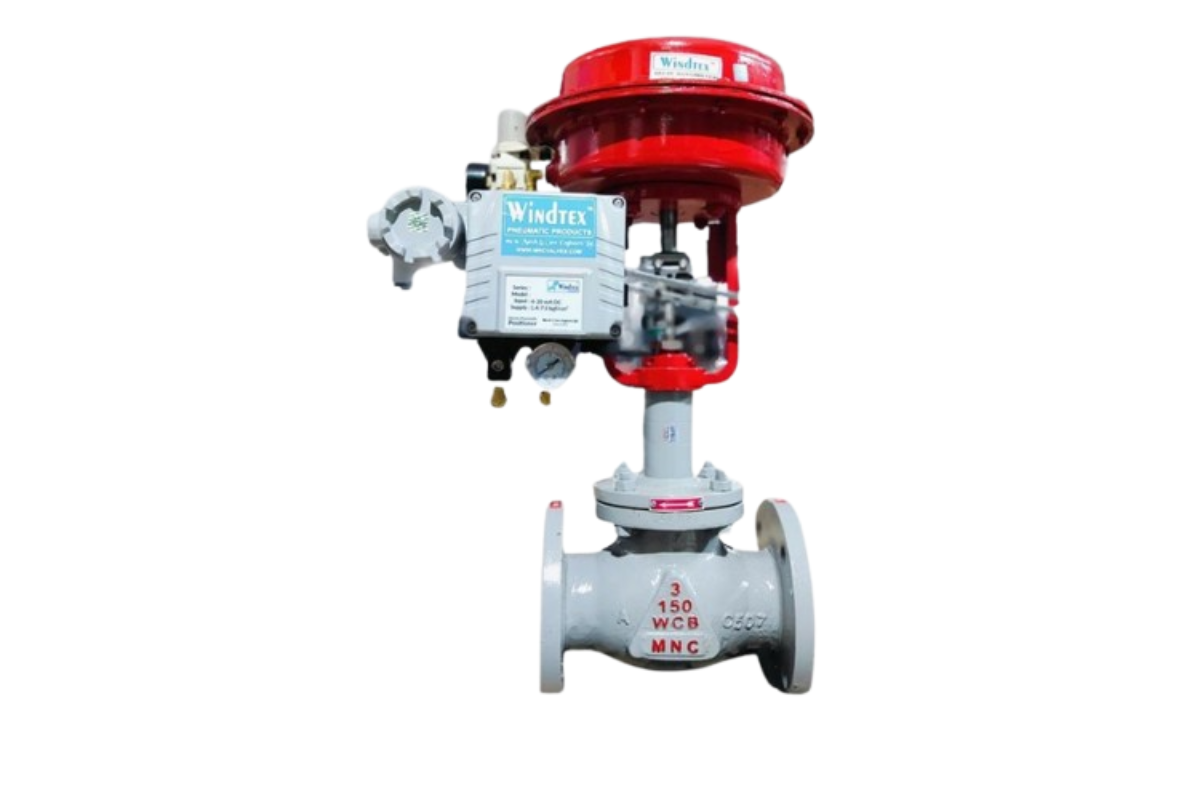
A control valve is an automatically operated valve used to regulate flow, pressure, temperature, or liquid level in a process system. It works by varying the valve opening in response to a control signal from a controller, actuator, or automation system. Unlike simple isolation valves, control valves are designed for continuous modulation and stable process performance.
Control valves are widely used wherever accurate adjustment of fluid flow is required. In modern industrial systems, they play a critical role in process optimization, equipment protection, energy efficiency, and automation reliability.
This page serves as the main control valve family hub. Explore our control valve categories below based on function, valve design, and actuation method.
Used for modulating flow through a single inlet and outlet path where accurate control of process fluid is required.
Used for mixing or diverting service in systems where two streams must be blended or one stream must be redirected.
Used where accurate control with isolation from actuator or bonnet area is required, especially in cleaner or corrosive service applications.
Air-operated control valve designed for fast response, continuous modulation, and reliable automation in industrial process systems.
Electrically actuated control valve designed for precise remote modulation, automation integration, and controlled flow adjustment.
A controller sends a signal to the actuator, which moves the valve plug, disc, diaphragm, or closure element. This changes the opening area inside the valve and regulates the amount of fluid passing through the system.
Unlike on-off valves, control valves operate in partially open positions for continuous modulation. Their performance depends on valve sizing, pressure drop, flow characteristic, actuator response, and system stability.
Two way control valves have one inlet and one outlet. They are used for direct modulation of flow through a single path and are widely used in water, steam, process fluid, and HVAC applications.
Three way control valves are used either for mixing two incoming streams or diverting one stream into two directions. They are commonly used in HVAC, heat exchangers, mixing systems, and temperature control loops.
Pneumatic control valves use compressed air to actuate the valve. They are widely preferred where faster response, reliable modulation, and industrial process integration are important.
Motorized control valves use an electric actuator for positioning. They are commonly used where compressed air is unavailable or where electrical integration with automation and building control systems is preferred.
Diaphragm control valves use a flexible diaphragm to isolate the process fluid from the actuator side or bonnet space, making them useful in selected clean, corrosive, and contamination-sensitive applications.
Typical Control Valve Consideration
Flow control / pressure control / temperature control / mixing / diverting
Two way / three way / diaphragm / pneumatic / motorized
CI / DI / WCB / CF8 / CF8M / application-specific materials
Flanged / threaded / application-specific connection
Pneumatic / electric motorized / manual override options
Water / steam / air / oil / chemicals / utility fluids
Pneumatic or electrical signal depending on actuator and control system
Modulating / mixing / diverting / regulating
HVAC / water treatment / utility / chemical / industrial automation
Used for regulated flow, dosing control, utility water control, and process automation in water and treatment systems.
Used in chilled water, hot water, and thermal mixing or diverting applications for building and industrial temperature control.
Used in process lines where stable flow control and chemical compatibility are important.
Used where controlled fluid regulation is necessary in thermal and utility systems.
Suitable in automated plants requiring continuous process modulation and remote control.
Used across applications requiring stable process control and automatic fluid regulation.
Single path modulation
Standard flow control
Simple and widely applicable
Mixing or diverting
Thermal and circulation systems
Multiple flow path control
Regulation with diaphragm isolation
Selected corrosive or cleaner services
Isolated process sealing
Air-operated modulation
Industrial automation
Fast response
Electric modulation
HVAC and utility automation
Electrical integration
Contact MNC Valves Limited for technical support, selection guidance, and quotation for your control valve requirement in water, utility, HVAC, chemical, and industrial automation applications.
Selection support
Automation guidance
Project quotation support
Business-ready follow-up
MNC Valve Limited Popular Products
Ball Valve
Butterfly Valve & Gate Valve
Strainers Valve
Non Return Valve
Control Valve
Other Valve
A control valve is used to regulate flow, pressure, temperature, or level in a process system by continuously modulating the valve opening.
Two way control valves regulate flow through one inlet and one outlet, while three way control valves are used for mixing or diverting fluid streams.
A pneumatic control valve is a control valve actuated by compressed air for fast and reliable modulating service.
A motorized control valve is electrically actuated and used for precise remote flow control in utility, HVAC, and automation systems.
Three way control valves are commonly used in mixing and diverting applications such as HVAC, heat exchangers, and circulation systems.
A diaphragm control valve uses a flexible diaphragm for flow regulation and is useful in selected corrosive or cleaner media applications.
It depends on the application. Pneumatic valves are often preferred for fast industrial response, while motorized valves are preferred where electrical control integration is required.
Control valves are used in water treatment, HVAC, utility systems, chemical plants, industrial automation, and many process industries.
Correct sizing is essential because an undersized or oversized control valve can cause unstable control, poor modulation, and inefficient process performance.
Because MNC Valves Limited provides product variety, technical selection support, and industrial control valve solutions suitable for modulation, automation, and process control applications.
WhatsApp us