
MNC Valves Ltd.
MNC Valves Limited manufactures lug type butterfly valves designed for stronger bolted installation, end-of-line service capability, improved maintenance flexibility, and reliable shut-off across water, utility, HVAC, chemical, and industrial process applications.
Threaded lug design for strong bolted mounting
Suitable for end-of-line service in many applications
Useful where maintenance flexibility is important
Manual, gear, pneumatic, and electric operated options
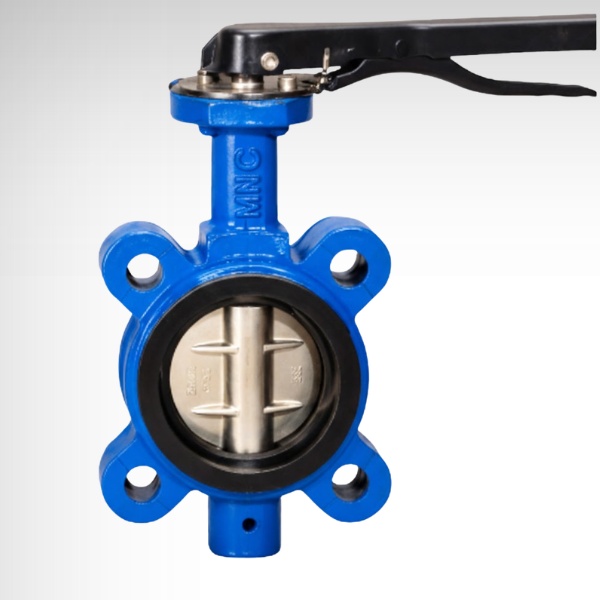
MNC Valves Limited offers lug type butterfly valves for applications where stronger bolted connection, end-of-line service support, and easier maintenance flexibility are important. Lug type construction is widely used because it allows the valve to be bolted directly through threaded lugs, giving more installation stability than wafer type in many service conditions.
Lug type butterfly valves are commonly selected in water treatment systems, chemical utility lines, HVAC circuits, industrial process systems, and plant utility pipelines where operational convenience and line service flexibility matter.
A lug type butterfly valve is a butterfly valve with threaded lugs cast or machined into the body. These lugs allow the valve to be bolted directly between flanges, and in many cases make end-of-line service more practical than wafer type design.
This design is commonly selected where the buyer wants stronger mounting, easier removal of downstream piping, and better maintenance flexibility within the pipeline system.
The valve body includes threaded lugs that allow flange bolting from both sides, creating a stronger and more service-friendly installation arrangement.
The disc rotates 90 degrees for opening and closing, providing fast shut-off and practical flow isolation.
Lug construction supports easier removal of one side of piping in many service conditions compared with wafer type design.
Specification
Lug Type Butterfly Valve
DN 40 to DN 1200
PN10 / PN16 / PN25 / PN40 depending on design
CI / DI / WCB / CF8 / CF8M
SG Iron / SS304 / SS316
EPDM / NBR / PTFE / Metal depending on duty
SS410 / SS304
Lug Type
Lever / Gear / Pneumatic / Electric
API / BS / EN as applicable
API 598
Suitability
Excellent
Highly suitable
Highly suitable
Highly suitable
Wafer type may be more economical
Double flanged may be better
Used in treatment, distribution, filtration, and support lines where stronger installation and service flexibility are beneficial.
Suitable in utility and chilled water lines where compactness and maintenance convenience are important.
Useful in treatment systems, plant support pipelines, and water-handling services.
Applicable with suitable material selection in selected chemical utility and support applications.
Used where practical shut-off and better service flexibility are required.
Suitable for plant support and general-purpose industrial flow handling systems.
Installation
Bolted through threaded lugs
Between two flanges
End-of-line service
Better suited
Generally limited
Maintenance flexibility
Better
Good
Cost
Higher than wafer type
More economical
Compactness
Good
Excellent
Contact MNC Valves Limited for technical guidance, product selection support, and quotation for your industrial requirement.=
Technical support for selection
Quotation support for project needs
Application-focused product guidance
Business-ready follow-up action
MNC Valve Limited Popular Products
Ball Valve
Butterfly Valve & Gate Valve
Strainers Valve
Non Return Valve
Control Valve
Other Valve
It is a butterfly valve with threaded lugs in the body for bolting between flanges and improved installation flexibility.
It is commonly used in water, HVAC, utility, ETP, and industrial process lines where stronger mounting and service flexibility are required.
The threaded lug construction often supports better end-of-line arrangement than wafer type design.
Lug type uses threaded lugs for bolting, while wafer type is clamped between two flanges without those threaded body lugs.
In many installation conditions, lug type offers stronger bolted support and better flexibility.
EPDM, NBR, PTFE, and metal seats are commonly selected depending on service requirement.
Yes, pneumatic and electric actuated versions can be provided.
Water treatment, HVAC, utility, chemical support systems, ETP, and general industrial sectors use them widely.
CI, DI, WCB, CF8, and CF8M are commonly available depending on requirement.
Yes, with suitable body, disc, and seat selection, it can be used in selected chemical applications.
PN10, PN16, PN25, and higher designs may be available depending on construction.
Common causes include wrong seat selection, disc damage, or improper flange bolting and alignment.
It can be used for limited throttling depending on design and application conditions.
Proper bolting ensures reliable alignment, sealing, and mechanical stability in service.
Yes, gear operation is commonly used for larger sizes where lever operation is not practical.
WhatsApp us