
MNC Valves Ltd.
MNC Valves Limited offers a focused range of special application valves and corrosion-resistant lined valves designed for critical industrial duties where standard valves may not be suitable. This section includes Flush Bottom Ball Valve, Reactor Bottom Valve, and a range of Lined Valves for demanding chemical and process applications.
Special application valves for bottom discharge and reactor service
Corrosion-resistant lined valves for aggressive chemical media
Designed for reduced dead space, safety, and process reliability
Suitable for chemical, pharma, API, utility, and specialty industries
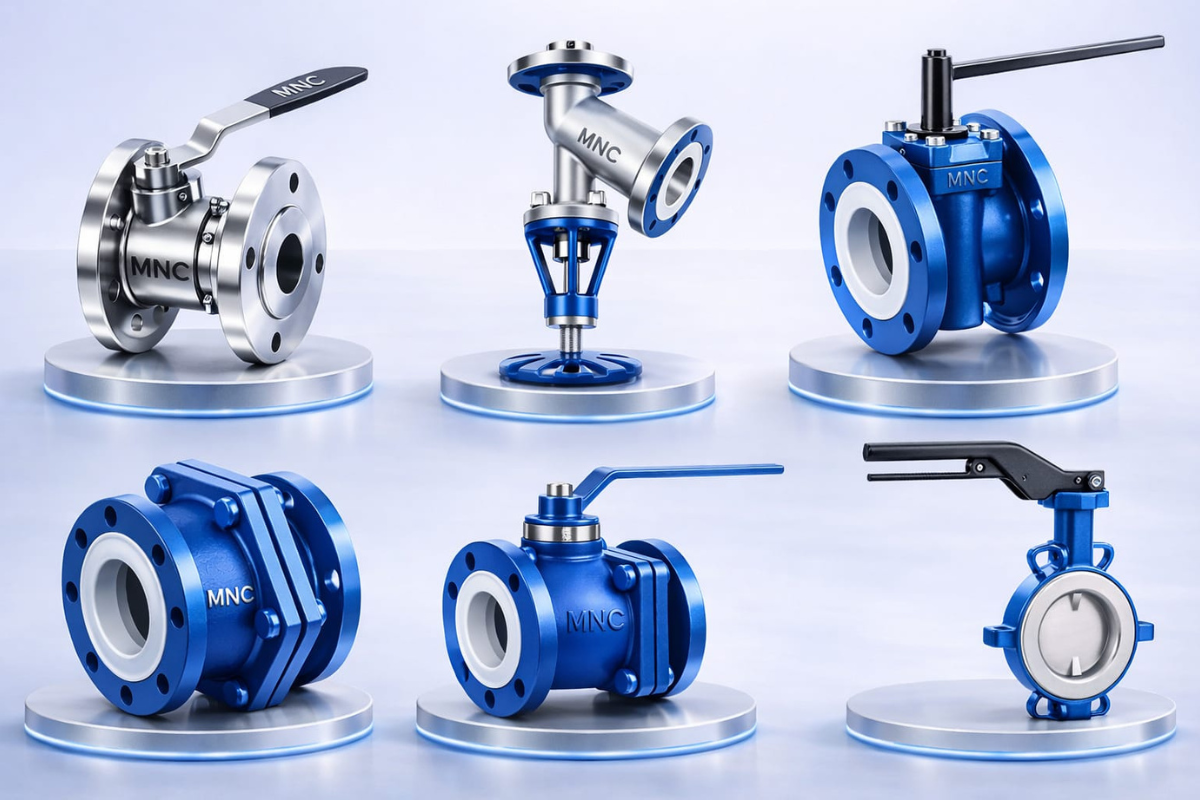
Specialized valves are engineered for process conditions where standard gate, globe, ball, butterfly, or check valves may not be the ideal solution. These applications often involve vessel bottom discharge, reactor service, corrosive chemicals, slurry-like media, viscous fluids, hazardous materials, or systems where dead space reduction and process safety are especially important.
This section of MNC Valves focuses on two key categories: special application valves and lined valves. Together, they address high-value industrial requirements in chemical, pharmaceutical, reactor, treatment, and specialty processing systems.
A flush bottom ball valve is designed for tank, vessel, or reactor bottom discharge where minimal dead space, smooth draining, and better process cleaning are important. It is commonly used in slurry, viscous media, chemical service, and applications requiring quick flushing or bottom outlet discharge.
A reactor bottom valve is used at the bottom outlet of reactors and process vessels for safe discharge, process isolation, and reduced dead pocket formation. It is commonly applied in chemical and batch processing systems where reliability, clean discharge, and process safety are critical.
Lined valves are designed for corrosive media handling by using internal lining materials such as PTFE, FEP, or PFA to protect the wetted surfaces from aggressive chemicals. These valves are widely used in chemical processing, pharmaceutical plants, acid handling, specialty fluids, treatment systems, and other applications where metal body exposure to process fluid must be minimized.
Designed for shut-off and controlled flow in corrosive fluid systems with internal lining protection for chemical resistance.
Used for flow isolation and utility control in corrosive process applications where lined body and disc protection are required.
Provides controlled shut-off in corrosive and chemical systems where plug design and lining combination offer process compatibility.
Prevents backflow in corrosive media pipelines while protecting internal wetted surfaces from aggressive process fluids.
Application-based lined valve options are selected depending on the chemical nature, temperature, pressure, and process compatibility requirement.
MNC Valves supports buyers in selecting the right valve type and lining material according to actual media and process requirement.
Lined valves help protect wetted surfaces from aggressive chemicals and extend service life in corrosive applications.
Flush bottom and reactor bottom valve designs help reduce product hold-up and improve process discharge in vessel bottom applications.
These specialized valves improve safety, product handling, and process consistency in challenging applications.
Useful in reactor and bottom outlet operations involving process-critical discharge and chemical compatibility.
Used in corrosive chemical handling, reactor systems, dosing applications, and process discharge service.
Lined valves are suitable where treatment chemicals and corrosive utility media require protective internal lining.
Used in chemical treatment and corrosive fluid handling applications where process compatibility matters.
Applicable in specialty process systems where cleaner media handling and controlled discharge are important.
Used in aggressive media, viscous products, bottom outlet systems, and custom industrial duties.
Flush Bottom Ball Valve
Tank/vessel bottom discharge
Slurry, viscous, draining, flushing duty
Reduced dead space and better discharge
Reactor Bottom Valve
Reactor outlet control
Reactor vessel discharge applications
Safer bottom outlet isolation and discharge
Lined Ball Valve
Corrosive shut-off duty
Chemical and acid applications
Corrosion-resistant internal lining
Lined Butterfly Valve
Corrosive utility/process isolation
Larger line size control
Compact and lined corrosion protection
Lined Plug Valve
Corrosive media control
Chemical process isolation
Plug design with lining compatibility
Lined Check Valve
Backflow prevention
Corrosive media lines
Reverse flow prevention with lining protection
Special valve guidance
Lining material support
Project-ready quotation
Chemical application support
MNC Valve Limited Popular Products
Ball Valve
Butterfly Valve & Gate Valve
Strainers Valve
Non Return Valve
Control Valve
Other Valve
Specialized valves are valves designed for critical applications such as vessel bottom discharge, reactor outlet duty, corrosive media handling, and other process conditions where standard valves may not be ideal.
A flush bottom ball valve is used for tank or vessel bottom discharge where reduced dead space and better draining or flushing performance are required.
A reactor bottom valve is used at the bottom outlet of reactors for safe discharge, isolation, and controlled process handling.
Lined valves are used in corrosive chemical applications where internal lining protects the valve wetted surfaces from aggressive media.
Lined ball valves, lined butterfly valves, lined plug valves, and lined check valves are commonly used depending on process duty.
PTFE, FEP, and PFA are commonly used lining materials depending on chemical compatibility and service conditions.
They are preferred because they help resist corrosion from aggressive chemicals and improve long-term valve reliability in harsh service.
Chemical plants, pharmaceutical plants, API manufacturing, specialty processing plants, and batch reactor systems commonly use them.
The choice depends on application duty. Flush bottom valves are generally selected for bottom draining and flushing performance, while reactor bottom valves are used where reactor outlet control and isolation are critical.
Because MNC Valves Limited provides technical selection support, application guidance, and specialized valve solutions for corrosive, reactor, bottom discharge, and specialty industrial process requirements.
WhatsApp us