MNC Valves Ltd.
MNC Valves Limited manufactures high-performance industrial ball valves engineered for reliable shut-off, low torque operation, long service life, and dependable flow isolation across oil & gas, chemical, water treatment, power, textile, pharmaceutical, and industrial process applications.
25+ Years Experience in industrial valve manufacturing and supply
Available in Floating, Trunnion, Single Piece, 2 Piece, 3 Piece, and Multi-Port designs
Suitable for shut-off, isolation, utility routing, process flow control, and automation support
Manufacturing, testing, and dispatch-oriented execution approach
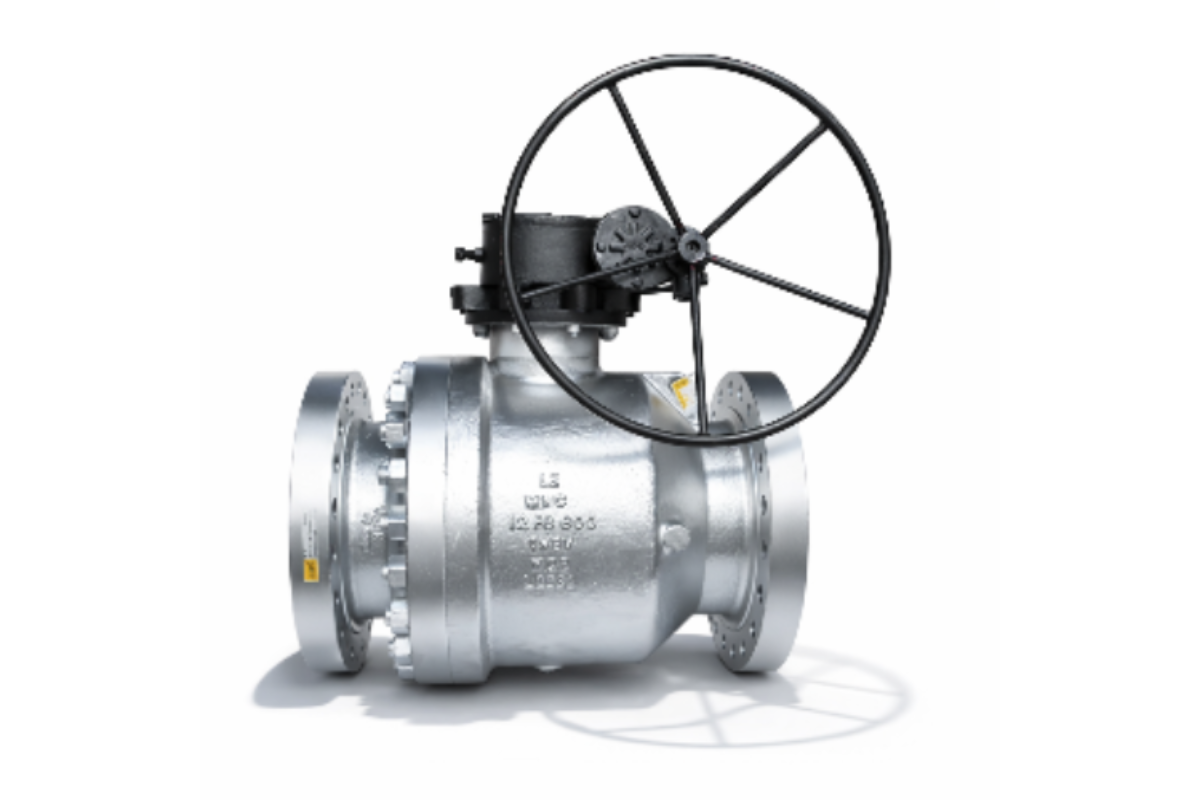
MNC Valves Limited is a trusted manufacturer and supplier of industrial ball valves designed for reliable shut-off, tight sealing, and efficient quarter-turn operation in industrial piping systems. Ball valves are widely preferred because of their simple operating mechanism, low pressure drop, compact design, and excellent shut-off performance.
Our ball valves are selected across oil & gas lines, chemical service systems, water treatment plants, utility pipelines, textile processing, pharmaceuticals, and general industrial applications. Each valve is chosen based on pressure class, body material, seat compatibility, media characteristics, operating temperature, and automation requirement.
A ball valve is a quarter-turn valve that uses a spherical ball with a central bore to control the flow of fluid. When the bore aligns with the pipeline, the valve remains open; when the ball rotates 90 degrees, the flow is blocked.
This valve category is commonly selected where the buyer needs dependable shut-off, quick opening and closing, low torque operation, and long service life. Ball valves are especially suitable for isolation duty in pipelines handling water, oil, gas, chemicals, and a wide range of industrial fluids.
Explore our complete ball valve family designed for shut-off, isolation, multi-port routing, automation, compact utility systems, and high-pressure industrial applications.
Suitable for standard industrial pressure applications where dependable shut-off and compact design are required.
Preferred for higher pressure and larger size applications where lower operating torque and stronger internal support are important.
Compact and economical threaded-end valve suitable for smaller utility and industrial shut-off applications.
Strong flanged-end construction suitable for general industrial shut-off and reliable process isolation duty.
Preferred where inline maintenance, easier servicing, and flanged-end industrial installation are required.
Compact threaded-end solution designed for easier servicing in smaller process and utility lines.
Suitable for mixing, diverting, and switching applications in flanged-end industrial process systems.
Used for advanced multi-line routing and directional control in compact industrial process layouts.
Compact threaded-end multi-port valve suitable for diverting and mixing duty in smaller systems.
Advanced compact multi-port valve for directional switching and routing in smaller threaded-end systems.
Available with pneumatic and electric actuators for automated shut-off, remote operation, and plant process control.
Specification
DN15 to DN600 depending on valve design category
Class 150 / 300 / 600
WCB / CF8 / CF8M / Duplex Steel
SS304 / SS316 / Duplex
PTFE / RPTFE / PEEK / Metal Seat
SS410 / SS304 / SS316
Flanged / Screwed / Butt Weld
Lever / Gear / Pneumatic / Electric
Depends on body and seat material selection
API 6D / API 608 / ASME
API 598
Note: Ball valve size range depends on design category. Flanged end multi-port models are typically available up to DN200, screwed end multi-port models up to DN50, while selecting industrial designs such as floating and trunnion mounted ball valves are available in larger sizes.
Suitable for hydrocarbon service, shut-off duty, utility lines, and industrial flow isolation where dependable sealing is required.
Selected for process lines, dosing systems, and corrosive media service when supported by correct body and seat material selection.
Used in filtration skids, process water handling, utility connections, and plant support systems where reliable shut-off is necessary.
Suitable for process utility lines, chemical handling, treatment systems, and industrial service applications in production environments.
Used where controlled shut-off, stainless steel construction, and application-specific material selection are important.
Widely used in process lines, utility systems, gas handling, and plant support applications across multiple industries.
Tight shut-off and isolation
Compact isolation and throttling
support
Full-flow isolation
Moderate to high depending on
design
Economical, especially in larger
sizes
Higher in many comparable
services
Low to moderate
Generally simple and compact
Moderate to higher depending
on service
Excellent shut-off with low
pressure drop
Good balance of compactness and flow control
Best for straight-through isolation duty
MNC Valves Limited follows a manufacturing-oriented approach focused on dimensional control, product reliability, assembly discipline, and industrial usability.
Quality is treated as a performance commitment, not a formality. Inspection and testing support service reliability before dispatch.
Industrial understanding built through long market and application exposure.
Suitable recommendations for materials, designs, port geometry, and operation modes based on real service conditions.
Real process capability backed by structured execution and testing discipline for dependable industrial use.
Connect with MNC Valves Limited for technical guidance, product selection support, and commercial quotations for your industrial requirement.
Technical support for selection
Quotation support for project needs
Application-focused product guidance
Business-ready follow-up action
The main advantage is dependable shut-off with quarter-turn operation, low pressure drop, and strong sealing performance in process and utility lines.
Floating ball valves are commonly selected for standard industrial applications, while trunnion mounted designs are preferred in larger sizes and higher pressure conditions where lower operating torque is important.
A 3 piece ball valve is preferred where inline maintenance and easier servicing are important without disturbing the major pipe connection.
Metal seated ball valves are selected for higher temperature, abrasive service, or demanding process conditions where soft seats may not be suitable.
Seat material directly affects sealing performance, temperature capability, chemical compatibility, operating torque, and long-term service reliability.
PTFE is widely suitable for many industrial and chemical services, but for higher temperature or more demanding conditions, other seat materials may be more suitable.
Ball valves are mainly preferred for shut-off and isolation duty. Limited throttling may be possible in some cases, but continuous throttling depends on valve design and service requirement
Actuator torque must be sufficient to overcome break torque, running torque, seat friction, differential pressure, and safety factor. Incorrect sizing can result in improper operation.
Common reasons include seat friction, build-up on internal surfaces, wrong seat selection, pressure differential, internal wear, or inadequate actuator sizing.
Yes, but only when selected with the correct body design, seat arrangement, and materials suitable for the operating temperature.
Stainless steel grades such as CF8 or CF8M are generally preferred, depending on the corrosive nature of the media and service condition.
Full bore valves provide a flow path close to pipe size with lower pressure drop, while reduced bore valves have a smaller internal flow passage and may be more compact or economical.
Yes, ball valves are widely used in gas applications because of their shut-off capability, compact design, and dependable sealing when correctly selected.
Ball valves are excellent for quick shut-off, but in some very large or specific full-flow isolation duties, gate valves may be preferred depending on line condition and project requirement.
Higher differential pressure increases torque requirement and can influence the choice of valve design, seat material, and actuator size.
The stem must withstand operating torque, repeated cycling, and corrosion exposure. Incorrect stem material can reduce reliability and service life.
Seat condition, ball surface, stem movement, leakage signs, actuator performance, and overall operating smoothness should be checked periodically.
Yes, ball valves are widely used with pneumatic and electric actuators for automated process control, shutdown duty, and remote operation.
Gear operation reduces manual effort in larger valves and supports better operational control where direct lever operation is not practical.
Manual operation is suitable for simpler applications, pneumatic actuation is preferred for fast automation, and electric actuation is chosen where controlled remote operation is needed.
WhatsApp us