Motorized Control Valve
- Home
- Motorized Control Valve
MNC Valves Ltd.
Motorized Control Valve Manufacturer in India
MNC Valves Limited offers motorized control valves designed for precise electrical modulation, remote operation, stable automation, and dependable control performance in HVAC systems, water treatment plants, utility services, building automation, and industrial process applications where electric actuation is preferred.
Electric actuator based automatic control valve solution
Perfect for BMS, PLC, and remote automation systems
Suitable for flow, pressure, and temperature control duty
Reliable option where compressed air is unavailable
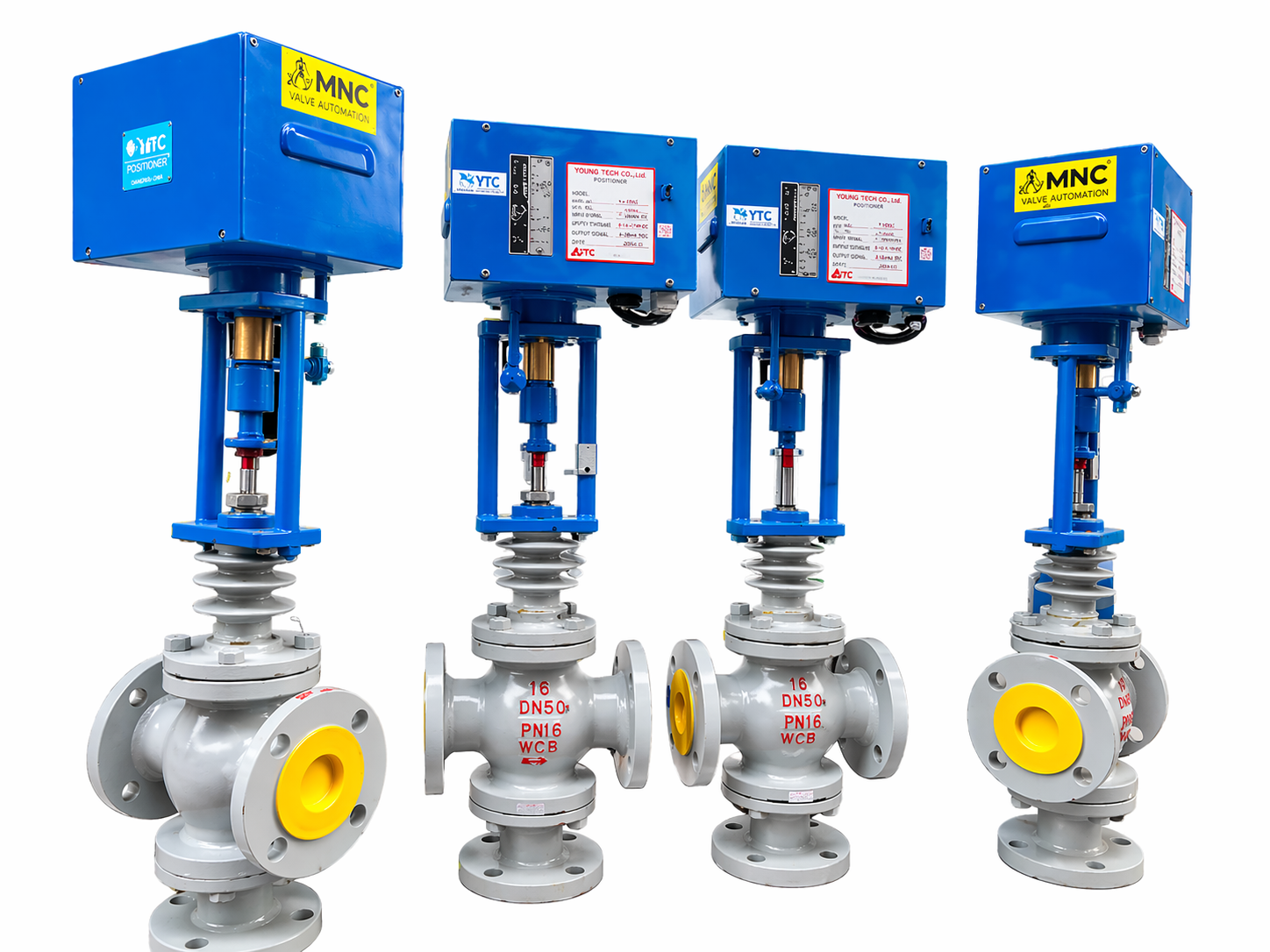
- MNC Valves Limited
- Motorized Control Valve
Why Industries Need Motorized Control Valves
No Compressed Air Infrastructure
Many plants, utilities, and building systems do not have pneumatic air supply, making electric actuation the most practical control solution.
Remote Automation Requirement
Modern systems need easy integration with PLC, SCADA, BMS, and electrical control panels for automatic and remote-controlled operation.
Stable and Repeatable Positioning
Motorized control valves are widely selected where accurate and repeatable valve positioning is required for consistent control performance.
What is a Motorized Control Valve?
A motorized control valve is a control valve operated by an electric actuator. It receives an electrical command signal and converts it into controlled valve movement for regulating flow, pressure, temperature, or system balancing. These valves are widely used in utility and automation systems where electrical integration is preferred over pneumatic actuation.
Motorized control valves are especially suitable in HVAC systems, water treatment plants, building automation systems, utility circuits, and industrial applications where accurate remote control, stable modulation, and easier electrical wiring integration are important.
How a Motorized Control Valve Works
Electrical Signal to Valve Movement
A controller, PLC, or BMS sends an electrical signal to the actuator. The motor inside the actuator drives the valve stem or closure element to the required position, adjusting the fluid flow according to process demand.
Controlled Modulation
The valve moves to intermediate positions for controlled modulation rather than simple on-off service. This allows automatic flow balancing, temperature regulation, and stable process control in electrical automation systems.
Main Components
- Valve body and internal regulating element
- Electric motor actuator
- Positioning and signal interface system
- Control signal connection from automation system
Why It Is Preferred
- No need for instrument air system
- Easy electrical automation integration
- Suitable for remote and centralized control
- Reliable for utility and building systems
Key Benefits of Motorized Control Valves
Electrical Automation Compatibility
Motorized control valves integrate smoothly with electrical control systems such as BMS, PLC, SCADA, and building automation platforms.
Accurate Positioning
They provide stable and repeatable positioning for reliable modulation in controlled utility and process systems.
Simplified Infrastructure
No compressed air network is required, which simplifies installation in many buildings, utilities, and light industrial environments.
Motorized Control Valve Applications by Function
Flow, Pressure, and Temperature Regulation
Motorized control valves are widely used for controlled adjustment of system variables in utility and automation-based applications.
- Flow control in utility lines
- Temperature control in HVAC and thermal systems
- Pressure control in selected applications
Two Way and Three Way Control Duties
Motorized actuators can be used on both two way and three way control valves depending on system design and control requirement.
- Motorized two way control valve
- Motorized three way control valve
- Mixing and diverting HVAC applications
Typical Technical Parameters
Parameter
Typical Consideration
Value Type
Motorized Control Valve
Main Function
Flow / pressure / temperature / mixing / diverting control
Actuation
Electric motor actuator
Signal Arrangement
Electrical control signal from controller / PLC / BMS
Body Material
CI / DI / WCB / CF8 / CF8M / application-specific materials
End Connection
Flanged / threaded / application-specific connection
Application Media
Water / hot water / chilled water / oil / utility fluids / selected process fluids
Duty Type
Modulating / regulating / mixing / diverting
Positioning Control
Electrical positioning and modulating arrangement
Typical Use
HVAC / water treatment / utility automation / BMS / industrial process support
Applications
HVAC Systems
Used in chilled water and hot water systems for automatic temperature and flow regulation in buildings and industrial facilities.
Water Treatment Plants
Suitable for utility water and process water control where electrical automation is preferred.
Building Management Systems
Perfect for integration into BMS-based control systems for centralized automation and energy management.
Cooling Systems
Used where remote modulation and stable utility control are required in circulating water or cooling loops.
Utility Services
Applicable in systems where electrical control architecture already exists and compressed air is unavailable.
Industrial Automation Support
Used in selected industrial applications requiring electrical actuation and remote-controlled flow regulation.
Pneumatic vs Motorized Control Valve
Parameter
Pneumatic Control Valve
Motorized Control Valve
Actuation Source
Compressed air
Electric power
Response Speed
Generally faster
Moderate and controlled
Best Use
Industrial process automation
HVAC, BMS, utility, and electrical control systems
Plant Requirement
Instrument air system required
Electrical control system required
Typical Preference
Process industries
Building, utility, and electrical automation applications
How to Select the Right Motorized Control Valve
Key Selection Factors
- Type of media and its pressure, temperature, and compatibility
- Required control logic: two way, three way, mixing, diverting, or regulating
- Integration requirements with BMS, PLC, or automation panel
- Control accuracy and response requirement
- Available power supply and electrical control architecture
Practical Selection Logic
- Choose motorized control valve where compressed air is not available
- Select electrical actuation where BMS or PLC integration is a priority
- Use the correct valve type according to single-path or multi-port duty
- Confirm valve materials according to actual media and service conditions
- Size the valve based on flow requirement and system duty, not pipe size alone
Engineering Considerations
Performance Considerations
- Proper actuator torque and positioning control are essential for stable performance
- Improper valve sizing can reduce control accuracy and efficiency
- Signal compatibility must match the control system architecture
- Application conditions influence valve body and trim selection
Practical Notes
- Motorized control valves are highly suitable for utility and building automation systems
- They simplify installation in environments without pneumatic supply
- Stable control depends on actuator performance and controller tuning together
- Electrical protection and wiring quality affect long-term actuator reliability
Need Double Flanged Butterfly Valve?
Contact MNC Valves Limited for technical guidance, product selection support, and quotation for your industrial requirement.=
Technical support for selection
Quotation support for project needs
Application-focused product guidance
Business-ready follow-up action
MNC Valve Limited Popular Products
Ball Valve
Butterfly Valve & Gate Valve
Strainers Valve
Non Return Valve
Control Valve
Other Valve
Frequently Asked Questions
1. What is a motorized control valve used for?
A motorized control valve is used for automatic electrical modulation of flow, pressure, temperature, and other process variables in utility and automation systems.
2. Why choose a motorized control valve instead of pneumatic?
Motorized control valves are preferred where compressed air is unavailable and electrical integration with PLC, BMS, or automation panels is required.
3. Where are motorized control valves commonly used?
They are commonly used in HVAC systems, water treatment plants, building automation, utility circuits, and selected industrial automation applications.
4. Can motorized control valves be used in two way and three way configurations?
Yes, motorized actuators can be used with both two way and three way control valves depending on application requirements.
5. What is the main advantage of a motorized control valve?
The main advantage is electrical automation compatibility without the need for a pneumatic air system.
6. Are motorized control valves accurate for modulation?
Yes, they are widely used for stable and accurate positioning in electrical control systems when properly selected and configured.
7. What kind of systems use motorized control valves most often?
HVAC, building management, water utility, and electrically controlled automation systems use them most often.
8. What should be considered when selecting a motorized control valve?
Media type, valve function, control requirement, electrical compatibility, actuator performance, and proper valve sizing should all be considered.
9. Is compressed air required for a motorized control valve?
No, motorized control valves use electric actuation and do not require compressed air for operation.
10. Why choose MNC Valves Limited for motorized control valves?
Because MNC Valves Limited provides technical selection support, actuator guidance, and motorized control valve solutions suitable for HVAC, utility, and electrical automation applications.