
MNC Valves Ltd.
MNC Valves Limited manufactures damper butterfly valves designed for air, flue gas, ducting, exhaust, ventilation, and process airflow control applications where reliable regulation, shut-off, and low-resistance movement are required.
Suitable for air, gas, flue gas, and duct applications
Used in ventilation, exhaust, and industrial airflow systems
Available in manual, gear, pneumatic, and motorized operation
Designed for process airflow control and isolation duty
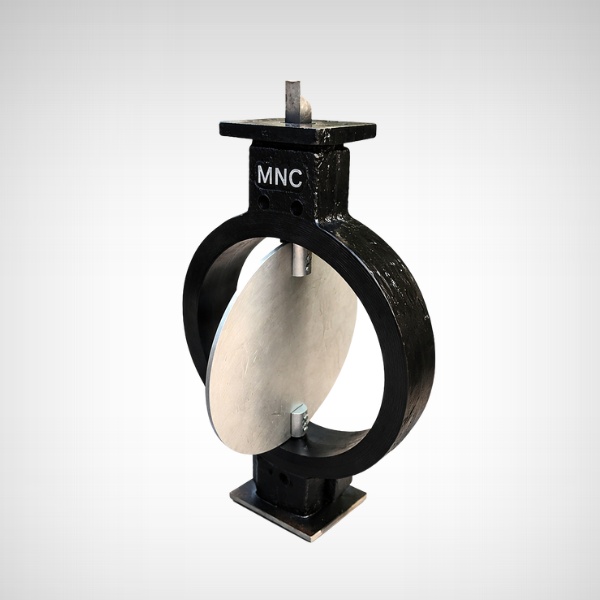
MNC Valves Limited offers damper butterfly valves for applications involving air, flue gas, ventilation, exhaust, and industrial duct flow control. These valves are selected where regulation or shut-off of non-liquid media is required in low to moderate pressure systems, process air handling lines, and industrial ducting arrangements.
Damper butterfly valves are commonly used in boilers, furnaces, air handling systems, dust collection systems, process exhaust lines, ventilation ducts, and industrial gas flow applications where practical control and dependable movement are important.
A damper butterfly valve is a butterfly-style valve designed primarily for controlling airflow, gas flow, exhaust flow, or duct-based media in industrial systems. It generally uses a rotating disc or blade assembly to regulate or isolate media within ducts, air lines, or low-pressure process gas systems.
This design is commonly selected where the buyer needs practical air or gas flow control, shut-off, or balancing in industrial ventilation and process systems rather than liquid-service pipeline isolation.
The disc or blade rotates within the body to control or isolate airflow, gas, or flue gas in duct and process systems.
Depending on design, the valve may operate as a simple on-off damper or as a controlled flow regulation device.
Damper butterfly valves are designed to fit industrial ducts, process air lines, and exhaust systems where space-efficient rotation control is needed.
Specification
Damper Butterfly Valve
As per duct size and project requirement
Air / Gas / Flue Gas / Exhaust / Ventilation Flow
MS / SS / WCB / Fabricated construction as required
MS / SS304 / SS316 depending on application
Metal-to-metal / soft seal / application-specific arrangement
MS / SS / suitable alloy as required
Flanged / fabricated / duct-mounted depending on system
Lever / Gear / Pneumatic / Electric / Motorized
As per media and construction design
Ventilation / Exhaust / Boiler / Furnace / Dust collection / Process air systems
| Requirement | Suitability |
|---|---|
| Air and gas flow control | Excellent |
| Ventilation and exhaust systems | Highly suitable |
| Boiler and furnace airflow balancing | Highly suitable |
| Dust collection and duct systems | Highly suitable |
| Liquid shut-off duty | Standard butterfly valve designs may be better |
| Process automation | Highly suitable with actuator or motorized drive |
Used in combustion air and flue gas handling systems for practical control and shut-off.
Applicable in air and exhaust flow systems where process control is important.
Widely used in industrial ventilation networks and air handling duct systems.
Useful in ducts and flow-control sections of industrial dust extraction systems.
Suitable for regulating and isolating exhaust flow in industrial installations.
Used where process air control, balancing, or shut-off is needed in industrial systems.
Main Service
Air / Gas / Flue gas / Duct systems
Liquid and utility pipeline service
Construction Focus
Duct and airflow control
Pipeline shut-off and flow control
Typical Use
Ventilation, exhaust, dust collection, furnaces
Water, utility, chemical, industrial pipelines
Sealing Arrangement
Application-based, often metal or special design
Resilient, PTFE, metal, depending on pipeline service
Automation Suitability
High
Industrial understanding built through long market and application exposure.
Suitable recommendations for materials, designs, port geometry, and operation modes based on real service conditions.
Structured production and testing approach for dependable industrial performance.
Contact MNC Valves Limited for technical guidance, product selection support, and quotation for your industrial airflow or gas handling requirement.
Technical support for selection
Quotation support for project needs
Application-focused product guidance
Business-ready follow-up action
MNC Valve Limited Popular Products
Ball Valve
Butterfly Valve & Gate Valve
Strainers Valve
Non Return Valve
Control Valve
Other Valve
It is a butterfly-style valve used mainly for controlling air, gas, flue gas, or duct-based flow in industrial systems.
It is commonly used in ventilation, boiler, furnace, exhaust, dust collection, and process air handling systems.
It is mainly designed for air and gas-related service, while standard butterfly valves are generally used for liquid pipelines.
MS, SS304, SS316, fabricated steel, and other application-based materials are commonly used.
Yes, pneumatic, electric, and motorized operation can be provided depending on system requirement.
Yes, depending on material and sealing arrangement, it can be designed for elevated temperature gas applications.
Damper valves are primarily for air/gas/duct systems, while standard butterfly valves are typically used in liquid-service pipelines.
Metal-to-metal, soft seal, or application-specific sealing arrangements may be used depending on service condition.
Yes, they are commonly used in dust collection and industrial extraction duct systems.
Abrasive particulate, frequent cycling, high temperature, and improper material selection can contribute to wear.
Yes, correct sizing is important for efficient airflow control, low resistance, and reliable performance.
Manual, gear, pneumatic, electric, and motorized operation options are commonly available.
Yes, they are widely used in combustion air, exhaust, and flue gas systems in boilers and related process equipment.
Yes, SS304 and SS316 constructions can be provided where corrosion resistance is required.
No. Final suitability depends on pressure, temperature, particulate level, shut-off requirement, and overall process condition.
WhatsApp us