
MNC Valves Ltd.
MNC Valves Limited offers motorized control valves designed for precise electrical modulation, remote operation, stable automation, and dependable control performance in HVAC systems, water treatment plants, utility services, building automation, and industrial process applications where electric actuation is preferred.
Electric actuator based automatic control valve solution
Perfect for BMS, PLC, and remote automation systems
Suitable for flow, pressure, and temperature control duty
Reliable option where compressed air is unavailable
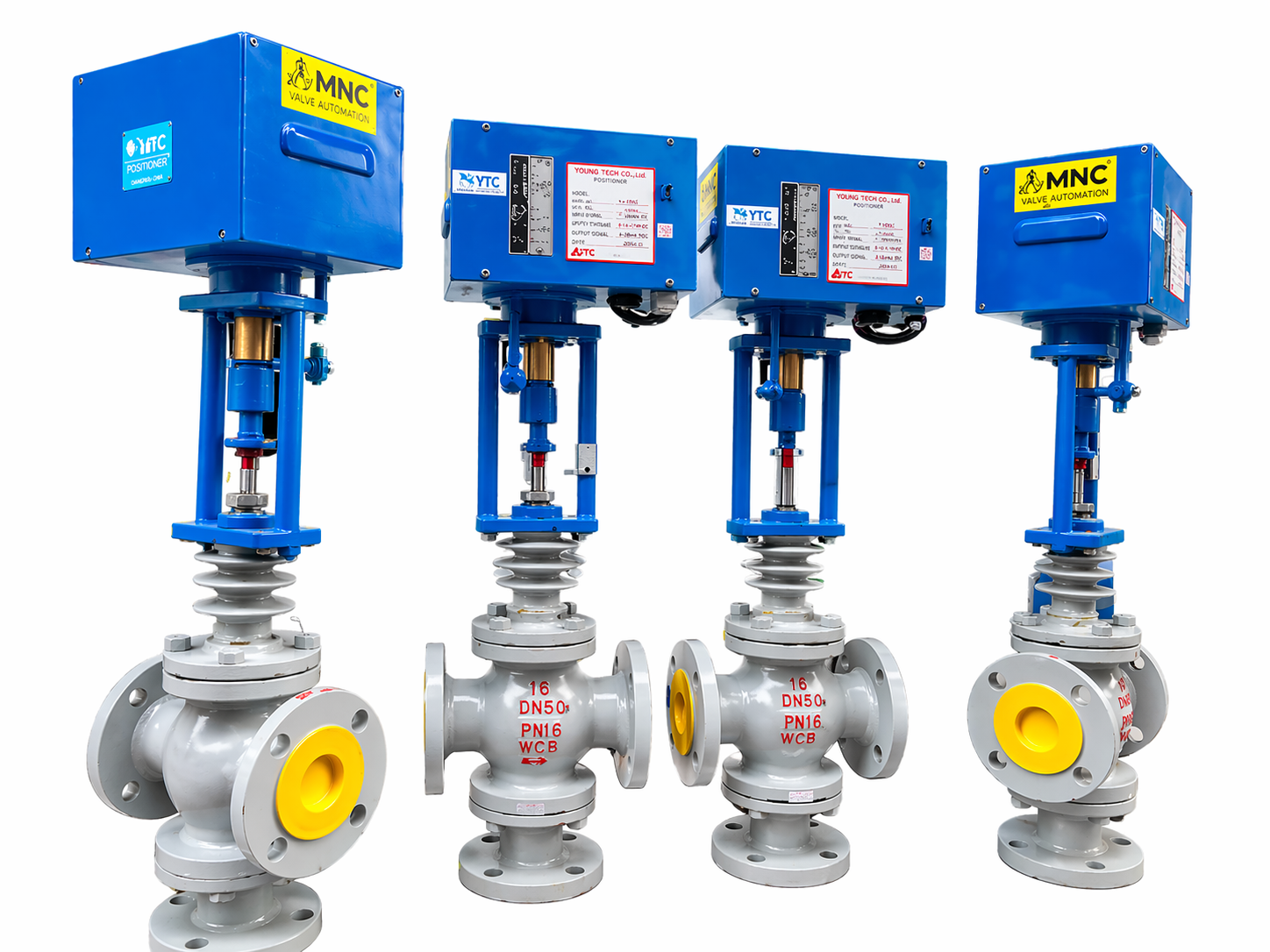
Many plants, utilities, and building systems do not have pneumatic air supply, making electric actuation the most practical control solution.
Modern systems need easy integration with PLC, SCADA, BMS, and electrical control panels for automatic and remote-controlled operation.
Motorized control valves are widely selected where accurate and repeatable valve positioning is required for consistent control performance.
A motorized control valve is a control valve operated by an electric actuator. It receives an electrical command signal and converts it into controlled valve movement for regulating flow, pressure, temperature, or system balancing. These valves are widely used in utility and automation systems where electrical integration is preferred over pneumatic actuation.
Motorized control valves are especially suitable in HVAC systems, water treatment plants, building automation systems, utility circuits, and industrial applications where accurate remote control, stable modulation, and easier electrical wiring integration are important.
A controller, PLC, or BMS sends an electrical signal to the actuator. The motor inside the actuator drives the valve stem or closure element to the required position, adjusting the fluid flow according to process demand.
The valve moves to intermediate positions for controlled modulation rather than simple on-off service. This allows automatic flow balancing, temperature regulation, and stable process control in electrical automation systems.
Motorized control valves integrate smoothly with electrical control systems such as BMS, PLC, SCADA, and building automation platforms.
They provide stable and repeatable positioning for reliable modulation in controlled utility and process systems.
No compressed air network is required, which simplifies installation in many buildings, utilities, and light industrial environments.
Motorized control valves are widely used for controlled adjustment of system variables in utility and automation-based applications.
Motorized actuators can be used on both two way and three way control valves depending on system design and control requirement.
Typical Consideration
Motorized Control Valve
Flow / pressure / temperature / mixing / diverting control
Electric motor actuator
Electrical control signal from controller / PLC / BMS
CI / DI / WCB / CF8 / CF8M / application-specific materials
Flanged / threaded / application-specific connection
Water / hot water / chilled water / oil / utility fluids / selected process fluids
Modulating / regulating / mixing / diverting
Electrical positioning and modulating arrangement
HVAC / water treatment / utility automation / BMS / industrial process support
Used in chilled water and hot water systems for automatic temperature and flow regulation in buildings and industrial facilities.
Suitable for utility water and process water control where electrical automation is preferred.
Perfect for integration into BMS-based control systems for centralized automation and energy management.
Used where remote modulation and stable utility control are required in circulating water or cooling loops.
Applicable in systems where electrical control architecture already exists and compressed air is unavailable.
Used in selected industrial applications requiring electrical actuation and remote-controlled flow regulation.
Actuation Source
Compressed air
Electric power
Response Speed
Generally faster
Moderate and controlled
Best Use
Industrial process automation
HVAC, BMS, utility, and electrical control systems
Plant Requirement
Instrument air system required
Electrical control system required
Typical Preference
Process industries
Building, utility, and electrical automation applications
Contact MNC Valves Limited for technical guidance, product selection support, and quotation for your industrial requirement.=
Technical support for selection
Quotation support for project needs
Application-focused product guidance
Business-ready follow-up action
MNC Valve Limited Popular Products
Ball Valve
Butterfly Valve & Gate Valve
Strainers Valve
Non Return Valve
Control Valve
Other Valve
A motorized control valve is used for automatic electrical modulation of flow, pressure, temperature, and other process variables in utility and automation systems.
Motorized control valves are preferred where compressed air is unavailable and electrical integration with PLC, BMS, or automation panels is required.
They are commonly used in HVAC systems, water treatment plants, building automation, utility circuits, and selected industrial automation applications.
Yes, motorized actuators can be used with both two way and three way control valves depending on application requirements.
The main advantage is electrical automation compatibility without the need for a pneumatic air system.
Yes, they are widely used for stable and accurate positioning in electrical control systems when properly selected and configured.
HVAC, building management, water utility, and electrically controlled automation systems use them most often.
Media type, valve function, control requirement, electrical compatibility, actuator performance, and proper valve sizing should all be considered.
No, motorized control valves use electric actuation and do not require compressed air for operation.
Because MNC Valves Limited provides technical selection support, actuator guidance, and motorized control valve solutions suitable for HVAC, utility, and electrical automation applications.
WhatsApp us