
MNC Valves Ltd.
MNC Valves Limited manufactures high-performance industrial strainers designed to remove unwanted particles, protect pumps and valves, reduce equipment damage, and improve the performance of industrial pipeline systems across water, chemical, power, textile, food, and process applications.
25+ Years Experience in industrial filtration and valve solutions
Basket, Duplex, Pot, T-Type and Y Type Strainers available
Protects pumps, meters, control valves, nozzles, and pipeline equipment
Manufacturing, testing, and dispatch-oriented execution approach
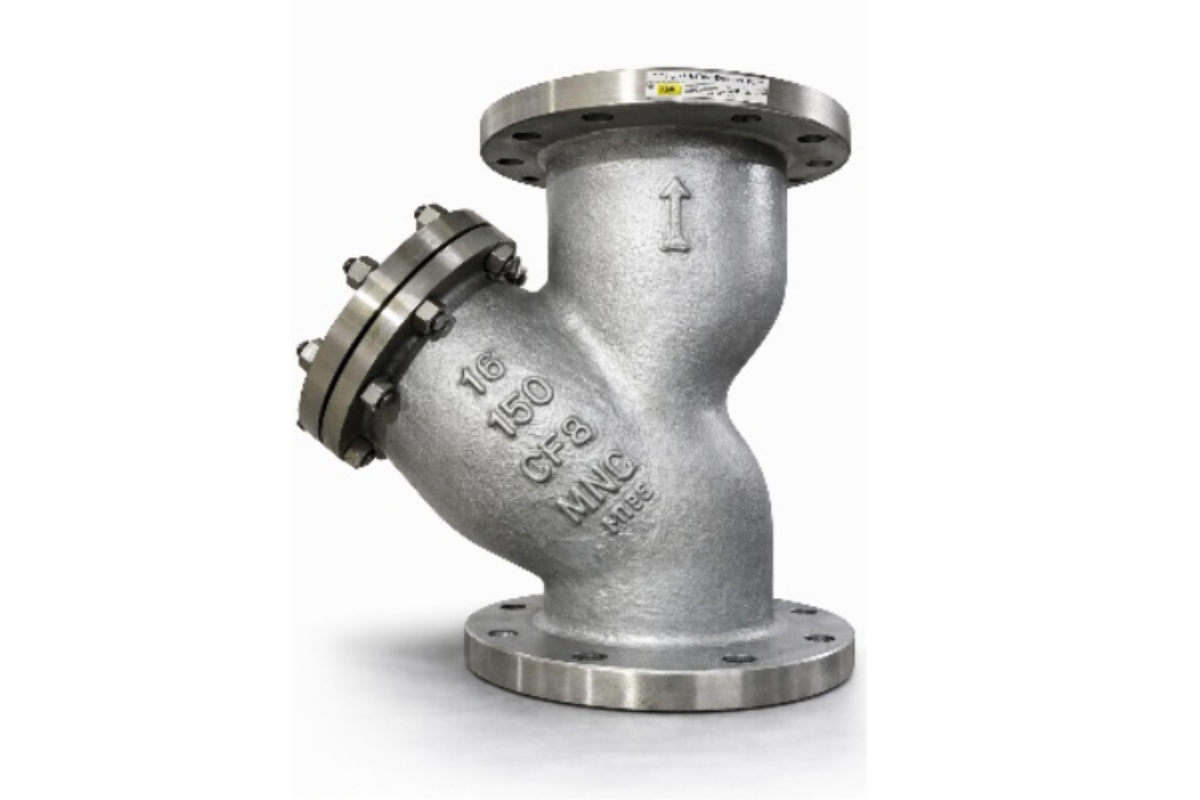
MNC Valves Limited manufactures industrial strainers designed to remove debris, solids, welding particles, scale, and other unwanted contaminants from flowing media. Strainers play a critical role in protecting pumps, control valves, meters, spray nozzles, heat exchangers, and other downstream equipment from damage or performance loss caused by impurities.
Proper strainer selection improves equipment life, reduces downtime, protects system efficiency, and supports smoother plant operation. Depending on pressure conditions, cleaning requirements, flow rate, and space availability, different strainer designs are selected for specific industrial duties.
An industrial strainer is a mechanical filtration device installed in a pipeline to capture and remove unwanted solid particles from liquids, gases, or steam. Unlike fine filtration systems, strainers are generally used to protect equipment by removing larger debris before the media reaches critical components.
This product category is commonly selected where the buyer needs pipeline protection, impurity removal, equipment safety, reduced maintenance, and reliable system performance. The right strainer type depends on flow requirement, contamination level, cleaning frequency, and installation layout.
Designed with a large basket area for higher dirt holding capacity and lower pressure drop. Suitable for high-flow applications and systems requiring easier basket cleaning.
Features two chambers for uninterrupted operation. One side remains online while the other side can be cleaned, making it ideal for continuous process duty.
Heavy-duty design suitable for handling larger debris loads and process systems requiring strong dirt holding capability.
Inline configuration suitable for higher flow systems and applications where a straight-through arrangement is preferred in horizontal lines.
Compact and widely used strainer design suitable for steam, liquid, and gas applications where space-saving installation is important.
Specification
DN15 to DN600 depending on valve design category
Class 150 / 300 / 600
WCB / CF8 / CF8M / CI / DI
SS304 / SS316
Custom mesh / perforation based on filtration requirement
Flanged / Screwed / Socket Weld
Manual cleaning / Online switching in Duplex design
API / DIN / BS / EN
API 598
Suitable for protecting valves, instruments, pumps, and downstream systems from debris or foreign particles.
Selected to protect process equipment from particulate contamination in corrosive and non-corrosive media lines.
Used to remove solids and protect pumps, nozzles, and treatment equipment in filtration and utility systems.
Used in utility and process systems to improve equipment safety and maintain cleaner flow conditions.
Applied in treatment and utility systems where suspended particles must be removed before critical equipment.
Used where reliable removal of unwanted solids is necessary for product quality and equipment protection.
Basket Type Strainer
High flow applications
Higher dirt holding capacity
Duplex Strainer
Continuous process systems
Cleaning without shutdown
Pot Type Strainer
Heavy particle loads
Strong debris handling
T – Type Strainer
Inline higher flow systems
Straight-through arrangement
Y Type Strainer
Compact utility systems
Space-saving design
Industrial understanding built through long market and application exposure.
Selection support for suitable strainer type, mesh, body material, and service condition.
Designed to protect equipment, reduce downtime, and improve pipeline system efficiency.
Connect with MNC Valves Limited for technical support, strainer selection, and commercial quotations for your industrial filtration requirement.
Technical support for selection
Quotation support for project needs
Application-focused filtration guidance
Business-ready follow-up action
MNC Valve Limited Popular Products
Ball Valve
Butterfly Valve & Gate Valve
Strainers Valve
Non Return Valve
Control Valve
Other Valve
The main function is to remove unwanted solid particles from the flowing media and protect downstream equipment from damage or performance loss.
A strainer generally removes larger debris and protects equipment, while filters are often selected for finer particle removal and more precise filtration duty.
It should be selected where higher flow, larger dirt holding capacity, and easier top-access basket cleaning are important.
Because one chamber can remain online while the other is cleaned, allowing uninterrupted operation without shutting down the process.
Pot Type Strainers are used where heavier debris load and stronger holding volume are required in industrial pipelines.
It is generally preferred in inline higher-flow systems where a straight-through arrangement is beneficial.
Because of its compact design, easier installation in limited spaces, and suitability for steam, gas, and liquid service.
The correct mesh size depends on the particle size to be removed, required equipment protection level, and acceptable pressure drop.
Pressure drop occurs due to obstruction created by the screen and increases further when debris accumulates on the filtration surface.
Regular cleaning prevents clogging, reduces pressure drop, protects system efficiency, and extends equipment life.
Stainless steel grades such as CF8 or CF8M are commonly selected depending on the media and service condition.
Yes, especially Y Type strainers are widely used in steam systems when selected with proper body and screen material.
An undersized strainer may create excessive pressure drop, frequent cleaning requirements, and reduced system efficiency.
They are installed upstream to protect critical equipment from debris, scaling, and particles that can damage internal components.
Yes, Basket Type, Duplex, and T - Type designs are commonly selected for higher flow applications depending on line size and duty.
The benefit is uninterrupted service, since one chamber can be cleaned while the other remains in operation.
Cleaning frequency depends on contamination level, flow rate, pressure drop, and the type of service media.
Perforated screens are used for larger particle removal, while mesh-lined screens are selected for finer filtration.
Yes, depending on application, custom mesh size and screen arrangement can be provided to meet specific filtration requirements.
Because MNC Valves Limited offers application-based strainer solutions, reliable manufacturing quality, practical support, and multiple design options for different industrial requirements.
WhatsApp us